Textile Decoded
Fabric Construction: Reading Count x Count and EPI x PPI
A beginner's lesson on reading a fabric construction such as 2/40 x 2/40, 120 x 80: what each number means, how ply is written, how construction drives GSM, cover, feel and cost, and how to compare two quotes line by line.
Jump to section
- What a construction line looks like
- The count numbers and ply notation
- EPI and PPI: how closely the threads are packed
- How construction drives GSM, cover and feel
- Why a cloth cannot be made a little finer
- How to count EPI and PPI on a delivered roll
- How construction drives cost
- Comparing two quotes by construction
- Where you will see this at Benny Cotts
Quick answer
A fabric construction is a short recipe for woven cloth, written as two pairs of numbers. The first pair is the yarn count of the warp (lengthwise threads) and the weft (crosswise threads), such as 2/40 x 2/40. The second pair is how many of those threads sit in one inch: ends per inch (EPI) for the warp and picks per inch (PPI) for the weft, such as 120 x 80. Warp always comes first. Together with the blend, weave and width, the construction decides how heavy the cloth is, how closed it looks and how it feels. It also decides how much yarn and loom time each metre needs. Two quotes are only comparable when their constructions match.
What a construction line looks like
On a mill's spec sheet or a buyer's enquiry you will often see a line like "2/40 x 2/40, 120 x 80" or "40s x 40s / 110 x 80". It looks like code, but it is just four facts about the cloth in a fixed order: warp count, weft count, ends per inch, picks per inch.
In earlier lessons you met the two thread sets in how a loom works: the warp runs along the length of the cloth and the weft is laid across it, one pass at a time. A construction simply says how thick each set of threads is and how closely each set is packed. The wider spec sheet, with blend, weight, finish and tests, is covered in how to read a fabric spec sheet.
| Part of "2/40 x 2/40, 120 x 80" | What it means |
|---|---|
| 2/40 (first) | Warp yarn: two 40s yarns twisted together |
| 2/40 (second) | Weft yarn: the same two-ply 40s |
| 120 | Ends per inch: 120 warp threads in one inch across the cloth |
| 80 | Picks per inch: 80 weft threads in one inch along the cloth |
The count numbers and ply notation
Count tells you how thick a yarn is. In the Ne system used for cotton and most spun blends in India, a higher number means a finer yarn, so 40s is finer than 20s. The full explanation is in yarn counts and blends explained; here you only need to read the notation.
"40s" or "1/40" means a single yarn of count 40. "2/40" means two single 40s yarns twisted together into one plied yarn. A two-ply yarn is roughly as thick as a single yarn of half the count, so 2/40 behaves close to a 20s in weight, but it is stronger, smoother and more even than a 20s single. That is why plied yarn is common in suiting warps. The warp takes the most strain on the loom, as the lesson on sizing explains.
So "2/40 x 1/20" is a cloth with a two-ply 40s warp and a single 20s weft: two yarns of similar thickness, built in different ways. Read each count on its own and do not assume the warp and weft match.
EPI and PPI: how closely the threads are packed
Ends per inch (EPI) counts warp threads across one inch of cloth. It is largely set before weaving, when every end is threaded through the reed, as shown in drawing-in. Picks per inch (PPI) counts weft threads along one inch, and it is set on the loom by how fast the cloth is drawn forward for each pick.
EPI is usually higher than PPI, as in 120 x 80, because the warp is the stronger, tensioned set and packing it closely is the efficient way to build a firm cloth. Both can be checked on finished fabric by counting threads under a magnifier called a pick glass. Expect a small difference from the loom figures, because cloth shrinks a little in width and length during processing, which packs the threads slightly closer.
How construction drives GSM, cover and feel
Weight follows from the construction. More threads per inch, or thicker threads (lower count), put more yarn into every square metre, so the GSM goes up. Finer yarn or fewer threads per inch bring it down. The weave and the finish shift it a little more, but the construction sets the base.
Cover is how much of the surface the yarns fill. It shows how closed or see-through the cloth is. It depends on both thickness and packing: fine yarns packed densely can give a cloth that is light yet closed, while coarse yarns set loosely can be heavy yet still show light through. This is why two shirtings of the same GSM can differ in show-through, as explained in shirting GSM and opacity.
Feel follows too. Finer, plied yarns at a higher setting tend to give a smoother, more even face with a crisper feel. Coarser yarns at a lower setting give a fuller, more open cloth. A very tight setting can feel firm and less airy; a very loose one can slip at the seams and look thin.
Why a cloth cannot be made a little finer
A common request is to keep the same cloth but make it a little finer. It cannot be done without changing something else. A finer yarn is thinner, and for the same fiber the diameter falls roughly in proportion to the square root of the count. That means the number of threads that fit side by side rises only as the square root of the count change. Moving a cloth from 40s to 60s lets the thread density rise by about a fifth, so a cloth set at 60 ends per inch becomes about 73, not 90.
The same logic applies to twist: a finer yarn needs more twist per inch to hold together, again in proportion to the square root of the count. So a finer cloth carries a different weight, a different handle and usually a different price, and it is a new construction, not a small adjustment. If a mill quotes a finer count as the same cloth, ask for the new construction line and the GSM.
The same reasoning gives a sanity check on a quote. There is a limit to how many threads of a given yarn fit in an inch before the cloth becomes jammed and boardy, so a construction that claims a very high density on a coarse count is either an error or a stiff cloth. Twill and satin weaves can pack more threads than a plain weave, because they have fewer crossings.
How to count EPI and PPI on a delivered roll
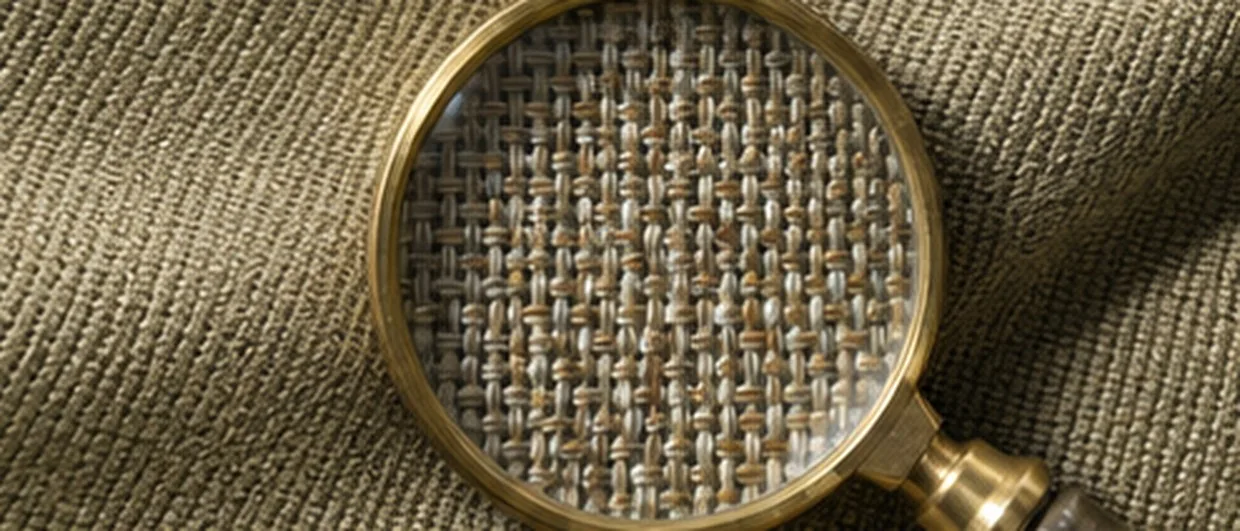
The construction on a quote can be checked on the roll with a pick glass, a small folding magnifier with a one-inch window. Count the warp threads, the ends, across the window, and then turn the glass and count the weft threads, the picks, along it. Warp runs along the length of the roll and weft across the width.
Take the count away from the selvedge, where the density differs, and away from the very end of the roll, where the cloth can be distorted. Lay the cloth flat without stretching it, since pulling it changes the count. Count in several places across the width and along the length and average the results. Some tenders ask for threads per 10 cm instead of per inch, so check which unit your specification uses before comparing a count to the paper.
A count a few threads either way is normal and within tolerance. A large gap between the paper and the roll is a reason to weigh a cut piece and ask the supplier to explain.
How construction drives cost
Construction is where most of a fabric's yarn and weaving cost is decided. Finer counts generally cost more to spin, and plying adds another step, so 2/40 usually costs more per kilo than a single yarn of similar thickness. The reasons are set out in what moves yarn prices.
Picks per inch drive loom time. Each pick is one pass of the weft, so a cloth with more picks per inch takes longer to weave each metre on the same loom. Ends per inch drive how much warp yarn goes onto the beam and how long warping and drawing-in take. A higher construction is not wasted money; it is more yarn and more machine time in every metre, and that is what a buyer is paying for.
Comparing two quotes by construction
- Ask for the full construction in writing: warp count, weft count, EPI, PPI, plus blend, weave and finished width.
- Check warp and weft separately. "2/40 x 2/40" and "2/40 x 1/20" can sit at similar weights but are different cloths.
- Check the ply. "40s" and "2/40" are not the same yarn, even though both contain the number 40.
- Compare EPI and PPI, not just GSM. A lower thread count can reach the same weight with thicker yarn, giving a more open, coarser cloth.
- Confirm whether the figures are loom (greige) or finished. Mixing the two makes a cloth look denser or looser than it is.
- Check the sample against the paper: count the threads with a pick glass and weigh a cut piece. Understanding fabric quotations shows how construction fits with the other lines on a quote.
When two quotes match on construction, blend, weave, width and finish, a difference in the offer reflects something else, such as processing, testing or terms. When they do not match, you are comparing two different fabrics.
Where you will see this at Benny Cotts
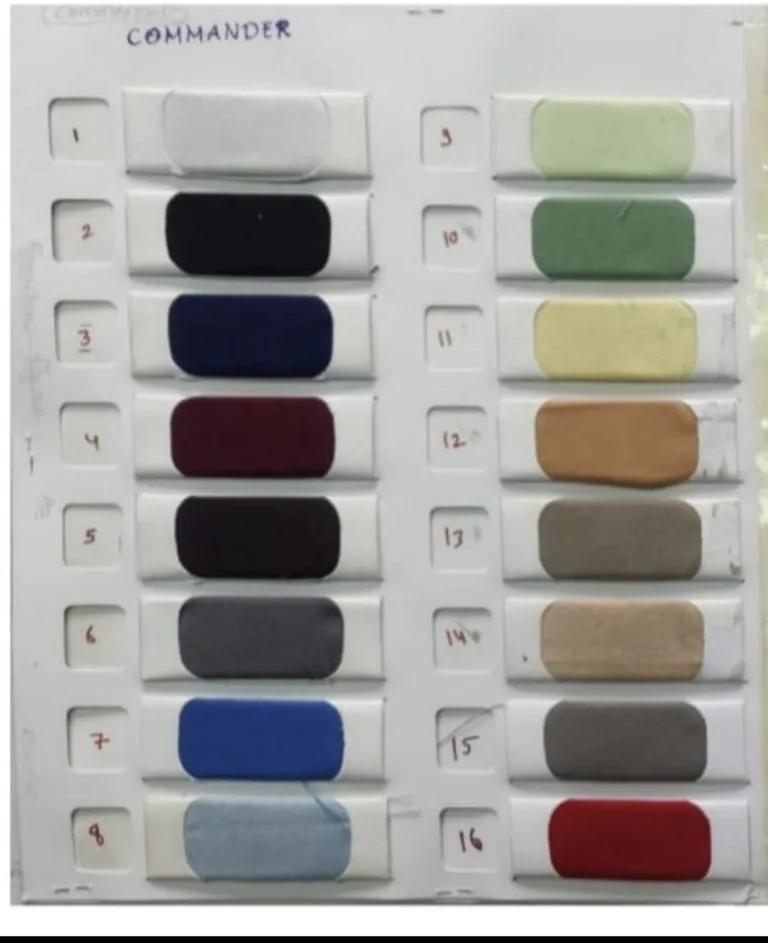
We weave in-house at Village Atoon in Bhilwara, so construction is set on our own looms; dyeing, processing, finishing and testing are done at partnered Bhilwara process houses. Our Commander PV Ultima shirting is a clear example: the standard range is 2/40 against 1/20, and the premium range is 2/40 against 2/40 for a finer, denser face. Same blend, different construction, different cloth.
FAQ
Frequently asked questions
- Which number comes first in a fabric construction?
- Warp always comes first. In "2/40 x 1/20, 120 x 80" the warp is 2/40 at 120 ends per inch and the weft is 1/20 at 80 picks per inch.
- What does 2/40 mean?
- Two single 40s yarns twisted together into one plied yarn. It is roughly as thick as a 20s single, but stronger and more even.
- Is a higher thread count always a better fabric?
- Not on its own. Thread count only means something alongside the yarn count. A higher EPI and PPI with fine yarn gives a smooth, closed cloth; the right construction depends on the weight, feel and use you need.
- Can I check a fabric's construction myself?
- Yes. Count the warp and weft threads in one inch with a pick glass, and weigh a cut piece to get the GSM. Yarn count is harder to check by hand, so ask for it in writing. To see our running constructions in real cloth, Request Catalog at /quote.
Cite this guide
Quoting this page? Paste the line below so the credit links back.
<a href="https://www.bennycotts.com/guides/fabric-construction-epi-ppi-count">Fabric Construction: Reading Count x Count and EPI x PPI</a>, Benny Cotts, 2026Next in Reading a fabric
Fabric Width and Cutting Yield Explained
More in Reading a fabric
- What GSM Means for Uniform Fabric
- Shirting GSM, Show-Through and Why Light Shirts Need More Than Weight
- How to Read a Fabric Spec Sheet
- Fabric Construction: Reading Count x Count and EPI x PPI
- Fabric Width and Cutting Yield Explained
- 36 Inch vs 58 Inch Shirting: Which Width to Order
- Than, Gaj, Panna: Fabric Unit Conversion Chart
- Fabric-Type Glossary: Gabardine, Matty, Twill, Serge
Updated 29 October 2026 · Benny Cotts, Bhilwara
Fabrics
Fabrics mentioned in this guide
Spec, price and MOQ on every fabric page.
Commander PV Ultima Shirting
Poly-Viscose (PV Ultima), 2/40 x 2/40 premium, 2/40 x 1/20 standard
PV Ultima spun shirting in 135 shades, 36" and 58", grey ready year-round.
Officer Choice
Poly-Viscose (PV) blend · 210-230 GSM
Crisp, structured suiting engineered for officer uniforms.
Commander Shirting 58"
Poly-Viscose 70/30 · 168 GSM
Fine 1/20 poly-viscose shirting in a full 58-inch width.
Industries this applies to
Uniform programs these fabrics are used for
Fabric types covered here
From the blog
- India's October Wholesale Prices: Textile Costs Still Up 13.7 Percent, Apparel Only 3.3. What That Means for Fabric Quotes
- Bangladesh Garment Owners Threaten to Quit the Wage Talks. What It Means for Fabric and Delivery Dates
- India's August Export Figures Are Published in Dollars. That Changes the Rupee Argument
Keep reading
Related guides

Ready to place an enquiry?