
Export markets
Bangladesh Graduates From LDC Status in November 2026: What It Means for Fabric Sourcing
Bangladesh leaves the UN's Least Developed Country category on 24 November 2026. The duty-free access its garment industry built its position on does not vanish that day, but the clock starts. What actually changes and when, and what it means for buyers sourcing fabric and garments from India.
Jump to section
What happens on 24 November 2026
Bangladesh is scheduled to graduate from the United Nations' Least Developed Country category on 24 November 2026. Graduation is a recognition of development progress, and it comes with a cost: LDC status is the legal basis for the duty-free, quota-free market access that Bangladesh's readymade garment industry, which accounts for over four fifths of the country's exports, has built its position on.
The date itself changes less than the headlines suggest. Nothing about a garment shipped on 25 November 2026 is taxed differently from one shipped the day before. What the date does is start the transition clocks in Bangladesh's biggest markets, and those clocks run out at different times with different consequences.
The real deadlines come later, market by market
The European Union, Bangladesh's largest export market, grants graduating LDCs a three-year transition under its Everything But Arms scheme, so duty-free access runs to late 2029. After that, Bangladesh needs a new basis for preferential access, and the most-discussed route, the EU's GSP+ scheme, is not automatic: it requires ratifying and implementing a set of international conventions, and the EU's own proposed rules include safeguard provisions that could limit benefits for exactly the clothing categories Bangladesh leads in.
The United Kingdom has confirmed a similar three-year runway, and under its Developing Countries Trading Scheme Bangladesh is expected to move to a tier that keeps garments duty-free beyond it. Other markets vary, and some LDC-specific benefits, such as certain export subsidies and pharmaceutical waivers, phase out on their own schedules.
So the honest summary is: no cliff in November 2026, a real cliff in the EU around 2029 unless GSP+ or a trade agreement lands first, and softer landings elsewhere. Analysts have modelled meaningful export losses for Bangladesh in the post-transition years; those figures are projections from models, not events that have happened, and they depend entirely on what replaces LDC access.
What this means on the India side
For buyers comparing sourcing countries, the graduation gradually narrows a tariff gap that has favoured Bangladesh for decades. Indian garments already compete without LDC preferences, and India has been building preferential access of its own: the India-UK trade agreement in force since July 2026 and the concluded India-EU agreement awaiting ratification. As Bangladesh's preferences sunset and India's agreements come online, fabric-plus-garment programs run out of India become relatively more attractive in exactly the markets where the gap was widest.
There is a second, less discussed channel. Indian mills supply significant volumes of fabric and yarn into Bangladesh's garment factories. Post-transition rules of origin will shape that flow: depending on the access route Bangladesh secures, the origin requirements on inputs may tighten or loosen, and demand from Bangladeshi cut-make-trim units for imported Indian fabric could shift either way. Anyone whose supply chain runs Indian fabric into Bangladeshi stitching should treat 2027 to 2029 as a period to watch rules-of-origin announcements, not just tariff schedules.
September 2026: Bangladesh tightened its own yarn imports
A separate move, and a smaller one, but it runs in the same direction and it happened while this post was live. On Monday 7 September 2026 Bangladesh's National Board of Revenue issued an order withdrawing the direct duty-free bonded warehouse facility for imported cotton yarn of 10 to 30 counts. Importers can still bring that yarn in, but they now have to furnish a bank guarantee equal to the import value along with a certificate from the relevant trade association, rather than drawing on the bonded facility directly.
The counts matter more than the mechanism. Yarn of 10 to 30 counts is reported to be over 60 percent of Bangladesh's total yarn imports and is mostly used by its knitwear manufacturers. An NBR official quoted anonymously described it as an inter-ministerial decision aimed at transparency and accountability in yarn imports, and the country's spinning mills welcomed it, while the garment-export side has been asking for it to be revisited.
Update, 14 September 2026: this has been suspended, a week after it was ordered. Bangladeshi trade reporting on 14 September says the Ministry of Commerce asked the National Board of Revenue on 13 September to suspend the withdrawal of the bond facility and the accompanying bank-guarantee requirement, pending further consideration, and that the suspension is intended to make room for further discussion between the ministry and the garment and textile associations on raw-material sourcing. So the position as of this update is that the facility stands and the bank guarantee is not being required. We have not been able to read either the original order or the suspension in the original, so both are trade-press attributed, and anyone whose own sourcing depends on it should confirm the live position directly.
The reversal is worth more to a buyer than the original order was. A measure that was announced, welcomed by one half of an industry, objected to by the other half and suspended within a week is a description of how contested the yarn-supply question has become in a country whose garment sector depends on imported yarn. Whether or not the bond facility survives the review, the underlying dispute does not go away with it, and it is the same dispute in a different form as the one running through India's own cotton and yarn price debate.
And the half that did not reverse is the more important one. While the import-side penalty was being suspended, the incentive on the other side was raised: Bangladesh Bank has increased the export cash incentive for garment exporters using locally produced yarn or fabric from 1.5 percent to 5 percent for FY27. That is a rate change rather than a request, it is not affected by the bond-facility suspension, and it pushes in the same direction the withdrawn order did. The push factor was suspended; the pull factor stands. For anyone reading Bangladesh as a sourcing alternative, the durable signal this month is that its policy is steadily paying its garment sector to buy yarn and fabric at home, which over time is a structural reduction in what it imports, including from India. Yarn of 10 to 30 counts alone is reported to be about 60 percent of the country's yarn imports.
One short-term note from the same week, relevant only to lead times. Bangladeshi textile bodies met the gas utility on 14 September 2026 warning that industrial gas pressure had fallen far enough to disrupt production and risk closures, and on 15 September the head of government assured a group of business associations that supply would be restored from that night. Nothing here changes a fabric specification; it is the kind of thing worth asking about if you are dual-sourcing Bangladesh on a dated programme.
For a buyer comparing India against Bangladesh, read this narrowly. It is cotton yarn for knitwear, not woven poly-viscose suiting, so it changes nothing about a PV quote from an Indian mill. What it does is remove a duty-free route into a large import channel that Indian spinners supply heavily, at the same time as Indian cotton yarn itself has risen sharply. Two pressures on the same cotton-yarn trade, from opposite ends of it.
We are attributing this to Bangladeshi business press reporting of the order rather than to the order itself, which we have not read. The figures above are the ones those reports carry, and the count range and the bank-guarantee condition are consistent across them.
What a buyer should actually do
- Nothing urgent in 2026. The November date starts clocks; it does not change duties.
- If you source garments from Bangladesh for the EU, map your exposure to the late-2029 EBA expiry now, and watch the GSP+ application and the safeguard question rather than assuming continuity.
- If you run or are considering fabric-plus-garment programs from India into the UK or EU, the direction of travel favours you: UK access is live, EU ratification is pending, and Bangladesh's edge narrows on a published schedule.
- If your chain sends Indian fabric into Bangladesh for stitching, follow the rules-of-origin detail in whatever replaces EBA, because that is where your leg of the chain gets decided.
- Treat every loss estimate you read as modelling. The useful planning inputs are the dates, which are published, not the projected figures, which are assumptions.
Our position in this
We weave uniform suiting and shirting in-house at Village Atoon, Bhilwara, with dyeing and finishing through partnered Bhilwara processing houses, and we supply export programs directly as well as fabric that enters garment chains elsewhere. The graduation story does not change what we make. It changes the relative arithmetic of where garments get stitched, slowly and on published dates, and buyers who plan against those dates rather than against headlines will make better sourcing decisions in both directions.
FAQ
Frequently asked questions
- Does Bangladesh lose duty-free access to the EU in November 2026?
- No. Graduation on 24 November 2026 starts a three-year transition under the EU's Everything But Arms scheme, so duty-free access runs to late 2029. What happens after that depends on whether Bangladesh secures GSP+ status or another arrangement, neither of which is automatic.
- How does Bangladesh's LDC graduation affect sourcing from India?
- It gradually narrows the tariff advantage Bangladeshi garments have held in preference-giving markets, while India's own agreements, the UK deal in force since July 2026 and the concluded EU deal awaiting ratification, improve Indian access. Over 2027 to 2029 that shifts the relative arithmetic toward India for fabric-plus-garment programs, without any single overnight change.
- Will Indian fabric exports to Bangladesh be affected?
- Possibly, through rules of origin rather than tariffs. Indian mills supply fabric and yarn into Bangladeshi garment factories, and the origin requirements attached to whatever replaces Bangladesh's LDC access will influence whether those factories favour imported or local fabric. The detail will not be known until the post-transition arrangements are settled.
- Are the large projected export losses for Bangladesh reliable?
- They are model projections, not events. Estimates vary widely because they depend on assumptions about which access route Bangladesh secures after 2029 and how buyers respond. The published dates, graduation in November 2026 and EU transition to late 2029, are the dependable planning inputs; the loss figures are scenarios.
Cite this post
Quoting this page? Paste the line below so the credit links back.
<a href="https://www.bennycotts.com/blog/bangladesh-ldc-graduation-fabric-sourcing">Bangladesh Graduates From LDC Status in November 2026: What It Means for Fabric Sourcing</a>, Benny Cotts, 2026Updated 15 September 2026 · Benny Cotts, Bhilwara
Fabrics
Fabrics mentioned in this note
Spec, price and MOQ on every fabric page.

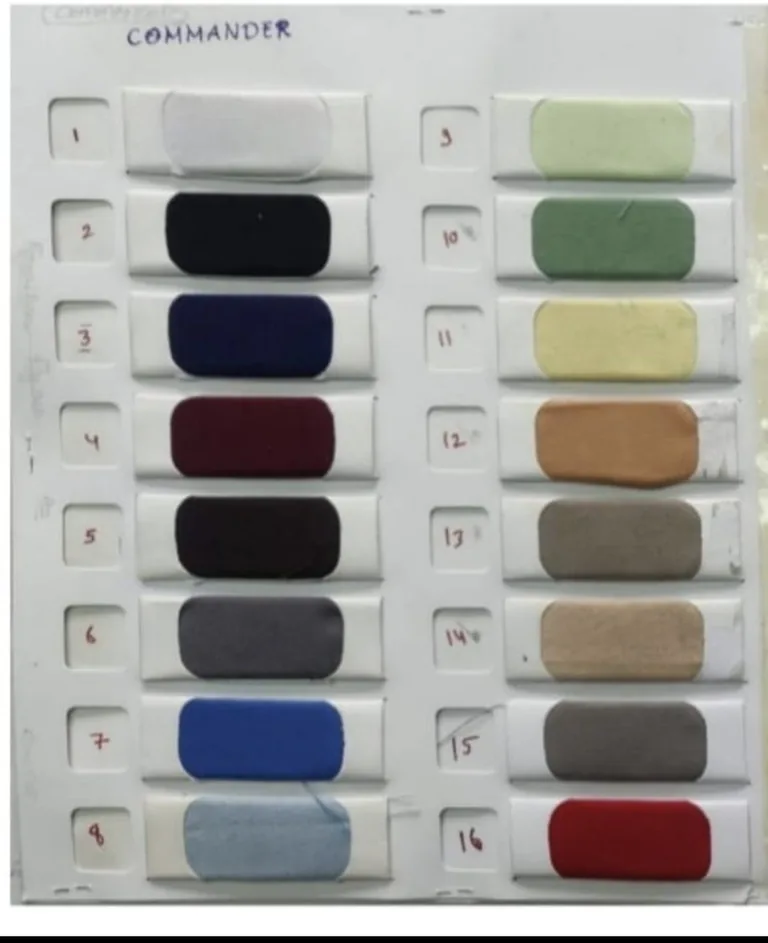
Commander Shirting 58"
Poly-Viscose 70/30 · 168 GSM
Fine 1/20 poly-viscose shirting in a full 58-inch width.
Commander PV Ultima Shirting
Poly-Viscose (PV Ultima), 2/40 x 2/40 premium, 2/40 x 1/20 standard
PV Ultima spun shirting in 135 shades, 36" and 58", grey ready year-round.
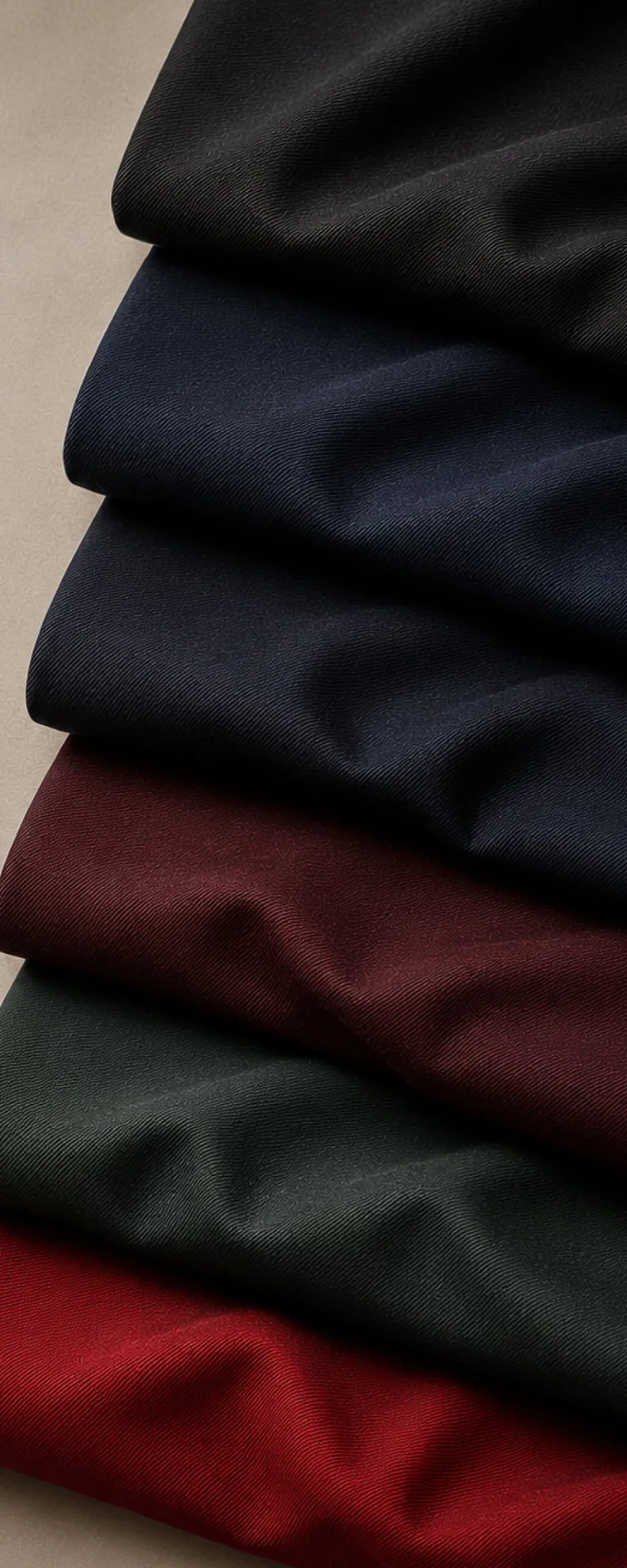
Serze Italian Premium
Poly-Viscose blend, fiber dyed · 405 g/m
Heavy fiber-dyed serge suiting, 405 g per metre at 58 inch.
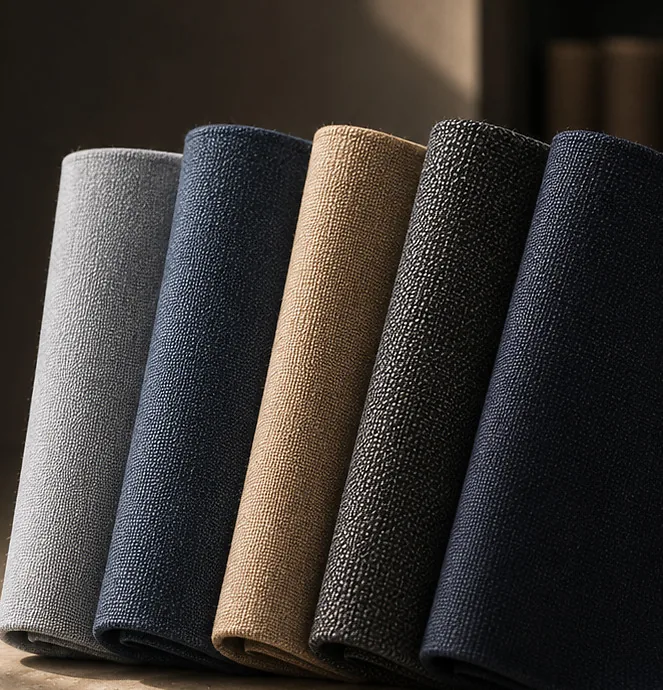
Delux-999
Poly-Viscose 65/35 · 208 GSM
Mid-weight poly-viscose suiting with a clean, versatile finish.
Industries this applies to
Uniform programs these fabrics are used for
Ready to place an enquiry?