
Fibre markets
Cotton Yarn Is Up About 60 Percent This Year, and It Is Eating the FTA Gains
Indian cotton yarn has risen roughly 60 percent since early 2026 on an exporters' council figure, against a domestic cotton shortfall the Tiruppur trade puts near 10 lakh bales. What a rise at the yarn stage, rather than the lint stage, changes for a uniform fabric buyer, and why it lands on the poly-cotton line and not the poly-viscose one.
Jump to section
- The move is at the yarn stage now, not just the lint stage
- Why a yarn move matters more to a buyer than a lint move
- The FTA point, which is the part most likely to surprise a buyer
- The official series behind the industry number
- Where this does not land: the poly-viscose line
- What to do with this if you buy uniform fabric
- A second ask, and this one would restrict what you can buy
- The downstream trade is now asking for a yarn floor price
- Where we stop
- Frequently asked questions
The move is at the yarn stage now, not just the lint stage
We have written before about cotton lint being high again and about the 31 October 2026 expiry of the import duty exemption that sits behind it. Reporting dated 11 September 2026 moves the story one link down the chain, which is the link a fabric buyer actually pays for.
The Apparel Export Promotion Council's figure, as carried in the business press on 11 September 2026, is that cotton yarn prices have risen about 60 percent since early 2026. The Tiruppur Exporters' Association describes a shortage of around 10 lakh bales of cotton and says spinning mills are running on cotton stocks sufficient for only four to six weeks. A consultancy quoted in the same reporting estimates production costs up by as much as 15 percent for exporters in that cluster.
The supply picture underneath is not a one-season wobble. Government data cited in the same coverage puts India's 2025-26 cotton production at 290.91 lakh bales provisional, against 352.48 lakh bales in 2020-21, with the decline attributed mainly to acreage moving to other crops. A shortfall that comes from planting decisions does not correct inside a quarter.
None of these figures are ours and none of them are a gazette. They are an export council's number, a trade association's estimate and a consultancy's estimate, reported together, and we have not found a primary document behind the 60 percent. Treat it as an industry reading of direction and size, which is genuinely useful, rather than as a measured statistic.
Why a yarn move matters more to a buyer than a lint move
A lint headline is two steps away from a quote. A yarn headline is one. By the time a move is visible in yarn, the spinner has already absorbed it or passed it on, and the weaver is buying at the new number rather than working through old stock.
The four-to-six-week stock position is the part to read carefully. A mill carrying six weeks of fibre cannot know its own replacement cost beyond six weeks, which is exactly why a quote against a cotton-rich specification carries a short validity window right now. That is what a short validity window is telling you, and in this market it is a supplier being accurate rather than a supplier applying pressure.
There is also a pass-through question that a buyer will meet from the other side of the table. Garment makers quoted in the same reporting say they cannot pass the full input rise to price-sensitive end markets and are absorbing part of it through sourcing and inventory. A fabric buyer negotiating with a converter is therefore negotiating with someone whose own margin has already been compressed upstream.
The FTA point, which is the part most likely to surprise a buyer
The framing in the 11 September reporting is that free trade agreements have improved India's market access while input costs have moved the other way, so the competitiveness the agreements were supposed to deliver is being consumed before the cloth is made. Market access and cost competitiveness are two different things, and only one of them has improved.
This matters to an overseas buyer holding a duty calculation. If you are pricing an Indian cotton-rich programme against a preferential rate under the UK agreement or looking forward to the India-EU agreement, the duty line is only one line. A double-digit move in the yarn underneath it can exceed the duty saving on top of it, and the two move independently. It is the same arithmetic as the weak-rupee case, where a favourable-looking line at one point in the calculation was cancelled elsewhere in it.
Apparel exporters asked the commerce ministry last month to consider regulating cotton yarn exports to contain domestic yarn prices, and the Tiruppur association has asked for the cotton import duty exemption to be extended. Neither has been granted. Both are live asks rather than policy, and we will not write them as anything else until something is notified.
The official series behind the industry number
Everything above rests on figures from industry bodies, which is why this post hedges their size. There is an official series that says the same thing in the government's own numbers, and we had not used it before: the Wholesale Price Index published monthly by the Office of the Economic Adviser. An index is a percentage rather than a price, so unlike almost every Indian price source it is something we can quote directly.
On the 2022-23 base, the provisional index for Manufacture of Textiles reads 94.4 in February 2026 and 104.3 in August 2026. Year on year, textile inflation ran 1.94 percent in February, 4.9 in March, 7.25 in April, 10.98 in May, 12.15 in June, 12.8 in July and 12.63 percent in August 2026. That is a cost line that accelerated steadily through the first half of the year and has now stopped accelerating, and it is measured rather than argued. Note that June has been revised upward since we first quoted it, from 10.85 to 12.15 percent, which is normal for a provisional series and a reason to treat any single recent month as indicative rather than final.
The comparison that matters sits one line below it in the same table. Manufacture of Wearing Apparel ran 3.39 percent year on year in February and 3.12 percent in August, essentially flat across the same months when textiles went from under 2 percent to nearly 13. Cloth is carrying a double-digit cost rise while the garment stage it feeds is carrying roughly 3 percent. The gap between the two lines was about 9.5 points in August, on an all-commodities rate of 9.92 percent.
That gap is the pass-through problem in official form, and it corroborates what the trade reporting describes anecdotally: the cost has moved and the stage facing the end buyer has not absorbed it. It is also the same shape as the polyester chain in our fibre-market post, arriving from an entirely different direction. August 2026, released on 14 September, is the latest month published, so the series lags by about six weeks and does not describe the second half of September.
Where this does not land: the poly-viscose line
The cotton chain and the polyester chain answer to different levers, and 2026 has made that unusually visible. Cotton is answering to acreage, a domestic shortfall and a duty window that closes on 31 October. Poly-viscose is answering to crude, to paraxylene and glycol, and to wood pulp and cotton linter on its viscose leg, which is a separate story with its own direction.
So a cotton yarn headline is not a reason to reprice a poly-viscose quote, and a firm polyester reading is not a reason to expect relief on a cotton-rich one. A buyer running both specifications in one programme is effectively running two positions in two unrelated markets, and should ask each quote what it is priced off rather than applying one headline to both.
Nor is any of this a recommendation to switch fibre. A blend earns its place in a uniform programme on laundry behaviour, colour fastness, abrasion and handle, and the poly-viscose against cotton comparison is the place to settle that question. Switching a specification to chase a market move usually costs a sampling cycle and a shade approval, which is a real expense set against a saving that may have moved by the time the cloth is on the loom.
What to do with this if you buy uniform fabric
- Ask what stage your quote was built at. A cotton-rich quote built on yarn bought six weeks ago and one built on yarn bought this week are different numbers, and the mill knows which it is holding.
- Take the short validity window at face value on cotton-rich cloth, and lock the specification so you can accept a number the day you like it rather than the week after.
- Do not net a duty saving against a yarn rise in your head. Price the two separately, because they move independently and only one of them is on a schedule you can read in advance.
- Put 31 October 2026 in the calendar. The import duty exemption on raw cotton runs to that date, nothing has been notified past it, and an extension should be treated as upside rather than as the base case.
- If your programme spans cotton-rich and poly-viscose lines, review them separately this season. One is exposed to acreage and a policy date, the other to crude, and a single conversation covering both will get one of them wrong.
A second ask, and this one would restrict what you can buy
The floor price ask described above is a pricing request. A second one, reported on 15 September 2026, is a supply request, and for a buyer that is a different kind of thing entirely.
The Apparel Export Promotion Council has written to the Union Commerce and Industry Minister asking the government to consider measures to regulate cotton yarn exports, particularly yarn of 20s count and above, and has also sought the Textiles Minister's intervention. The stated reasons are the sharp rise in yarn prices, reported at roughly 60 percent since early 2026, and growing flows of Indian cotton and cotton yarn to competing apparel hubs. Industry representatives in Tiruppur are reported to estimate that higher yarn prices have pushed their production costs up by as much as 15 percent. On the supply side, provisional figures cited in the same reporting put cotton production at 29.091 million bales for 2025-26 against 35.248 million bales in 2020-21.
Why a buyer should read this one differently from the other two asks on this page. A floor price and a duty exemption change what cloth costs. An export restriction changes whether a particular count band leaves the country at all. If it were granted, an overseas buyer sourcing cotton yarn or cotton-rich cloth in that band would be negotiating for something whose availability had been deliberately narrowed, which is a conversation about allocation rather than about price.
Three honest qualifications. Nothing has been granted. This is a council's letter, not a notification, and no instrument exists. It is cotton, not poly-viscose. Our own suiting and shirting is poly-viscose, which answers to crude and to the viscose feedstocks rather than to the cotton crop, so a curb on 20s-and-above cotton yarn would not reach a poly-viscose quote at all; it is on this page because the same cost wave is what generated all three asks. And it is the apparel side asking, so it runs against the spinning side's interest, which is the same split that produced the floor price ask from the other direction.
The downstream trade is now asking for a yarn floor price
Added 14 September 2026. The Joint Committee of the Tiruppur Knitwear and Textile Cluster, together with some Tamil Nadu textile mill associations, has asked the Union government to fix a minimum floor price for yarn, according to reporting in the Indian business press on 14 September. The stated trigger was frequent and steep hikes in cotton yarn prices.
The asks are worth reading as a set, because together they describe where the trade thinks the pressure is coming from. Yarn exports should be permitted only above the floor price, which would take cotton rates into account. Import duty on cotton should be removed for five years, which is a longer version of the exemption currently running to 31 October 2026. Tamil Nadu mills should get Cotton Corporation of India cotton on a priority basis, with checks on cotton bought from the CCI for export being resold domestically at higher prices, and the state government should procure directly from farmers and supply state mills.
One ask is aimed at the mills rather than at the government, and it is the one a buyer will recognise immediately: the committee asked textile mills to fix yarn prices once a month or once every two months instead of revising them frequently. That is the same complaint a uniform buyer makes about a short quote validity window, made one stage further up the chain, and it is a useful reminder that a short validity is a symptom rather than a tactic.
Keep the status straight. This is an industry association's request, not a policy decision. No floor price exists, no export condition has been imposed and no five-year duty removal has been announced. Nothing in it changes a quote today. We are recording it because an ask of this kind is evidence about the size of the move this post describes, and because a floor price on yarn exports, if it ever arrived, would be a domestic price event rather than an export one.
Where we stop
There are no fabric prices in this post and no forecast. The percentage figures above come from industry bodies and consultancies as reported in the business press on 11 September 2026, not from our price list, and our own fabric is quoted per order against shade, quantity and finish.
We also hold the shape of the claim loosely. A 60 percent move is a large number attributed to an export council in a piece arguing for policy help, and bodies asking for intervention have an interest in the size of the number they cite. The direction is corroborated across the lint, yarn and stock-position readings we can see; the exact magnitude is not something we can stand behind, and the difference is worth saying out loud.
FAQ
Frequently asked questions
- How much have Indian cotton yarn prices risen in 2026?
- About 60 percent since early 2026, on a figure attributed to the Apparel Export Promotion Council in business-press reporting dated 11 September 2026. It is an industry body's number rather than a government statistic, and we have not found a primary document behind it, so read it as a direction and a rough size.
- Why is cotton yarn rising when the import duty on cotton was removed?
- Removing a duty stops Indian cotton being dearer than the world price; it cannot make it cheaper than the world price. Underneath the duty sits a domestic shortfall, put at around 10 lakh bales by the Tiruppur Exporters' Association, and a production decline from 352.48 lakh bales in 2020-21 to 290.91 lakh provisional in 2025-26. The exemption also expires on 31 October 2026.
- Does a cotton yarn rise affect a poly-viscose uniform fabric quote?
- No, not directly. Poly-viscose is priced off crude-linked polyester and off viscose made from wood pulp and cotton linter. Those chains have their own pressure this year, but it arrives from crude and feedstock rather than from the domestic cotton crop, so the two quotes move independently and should be discussed separately.
- Will free trade agreements offset the higher yarn cost for buyers?
- Not automatically. A trade agreement changes the duty a buyer pays at their own border; it does not change what the yarn inside the cloth cost. When a double-digit input move sits underneath a single-digit duty saving, the saving can be consumed before the cloth is woven, which is exactly the concern the September 2026 reporting raises.
- Is there an official Indian figure for rising fabric costs, rather than an industry one?
- Yes. The Wholesale Price Index from the Office of the Economic Adviser puts year-on-year inflation for Manufacture of Textiles at 12.63 percent in August 2026, up from 1.94 percent in February, on the 2022-23 base. Manufacture of Wearing Apparel over the same months went from 3.39 to 3.12 percent, so the cloth stage is carrying a double-digit rise while the garment stage is close to flat. August is the latest month published, and it is the first month since February in which the textile rate has eased rather than risen, by a small margin.
- Should I switch from cotton-rich to poly-viscose uniform fabric this season?
- Not on a price headline alone. Choose the blend on laundry behaviour, colour fastness, abrasion and handle for the programme, then manage price with a locked specification and an honest validity window. A switch made to chase a market move costs a sampling and shade-approval cycle, and the move may have travelled by the time the cloth reaches the loom.
Sources
Primary documents
The government and inter-governmental documents behind the dates and figures above, so you can read them yourself. Anything attributed to trade press or to a research note is named in the copy rather than linked here.
- 1. Office of the Economic Adviser, WPI and PPI press release for July 2026 (provisional) (Manufacture of Textiles and Manufacture of Wearing Apparel, index and year-on-year tables.)
Cite this post
Quoting this page? Paste the line below so the credit links back.
<a href="https://www.bennycotts.com/blog/cotton-yarn-price-surge-fta-gains-2026">Cotton Yarn Is Up About 60 Percent This Year, and It Is Eating the FTA Gains</a>, Benny Cotts, 2026Updated 15 September 2026 · Benny Cotts, Bhilwara
Fabrics
Fabrics mentioned in this note
Spec, price and MOQ on every fabric page.
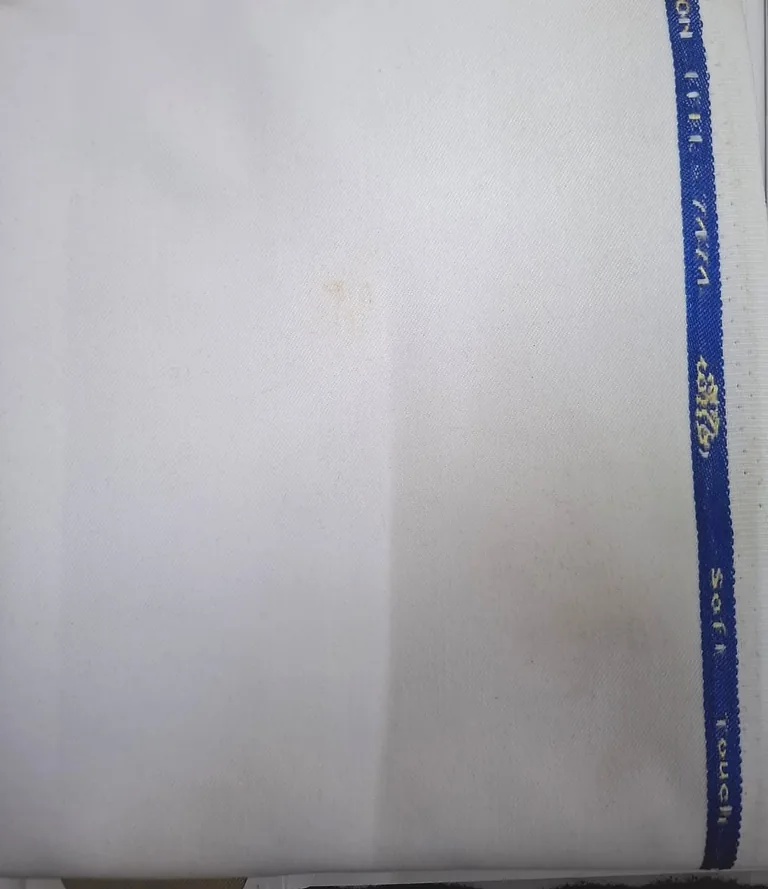
Cotton Cool-3200
Poly-Viscose 65/35 · 249 GSM
Breathable poly-viscose with a cool, cotton-like handle for uniforms.
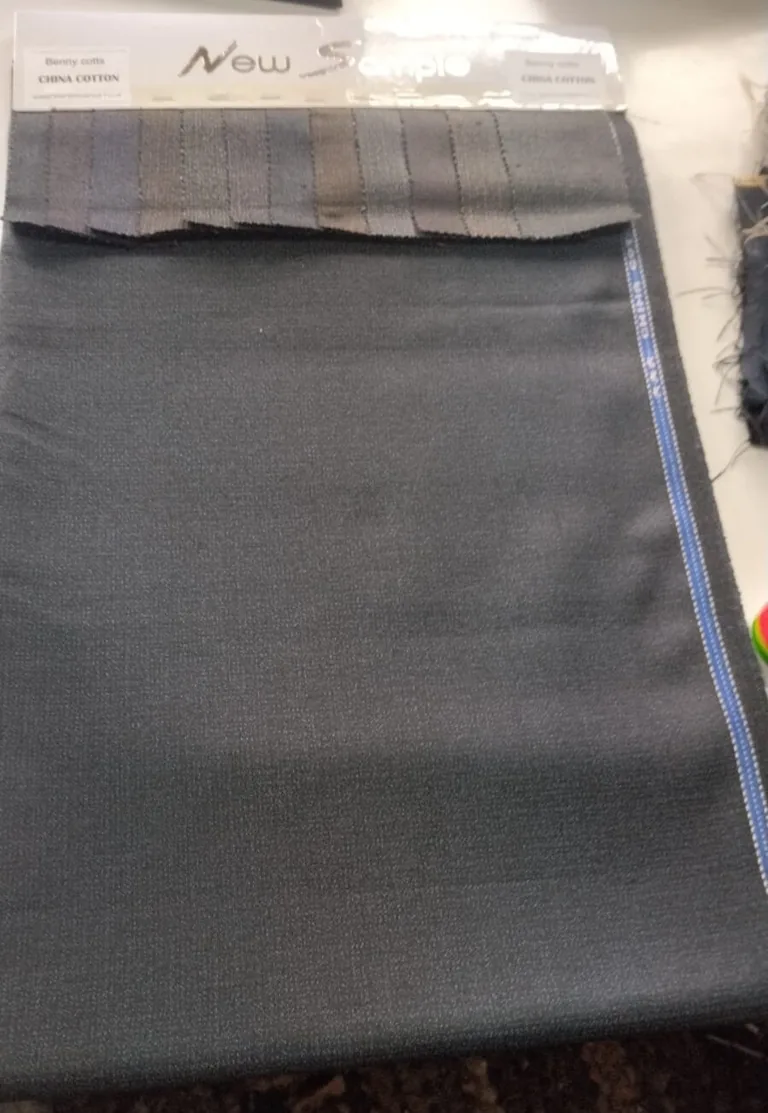
China Cotton
100% Polyester · 201 GSM
Heavier cotton-look suiting for structured uniform wear.
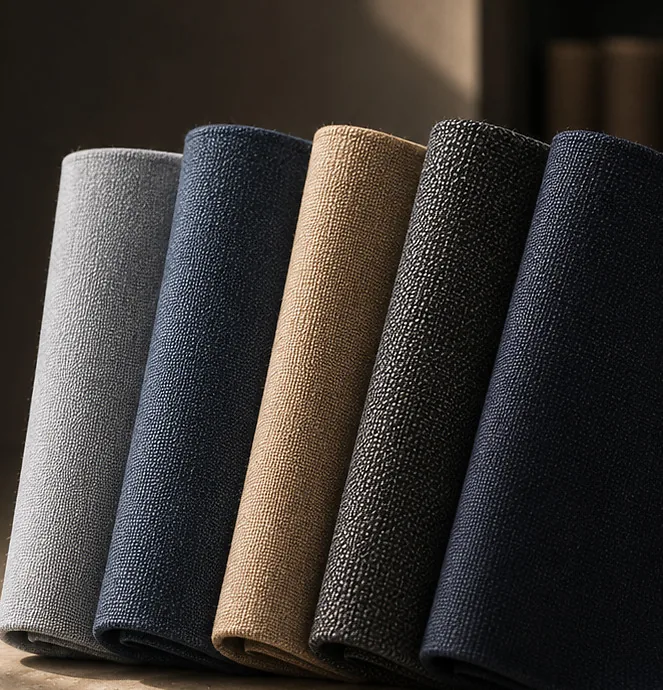
Delux-999
Poly-Viscose 65/35 · 208 GSM
Mid-weight poly-viscose suiting with a clean, versatile finish.
Today Plus
Poly-Viscose 65/35 · 205 GSM
Versatile mid-weight poly-viscose for corporate uniform programs.
Industries this applies to
Uniform programs these fabrics are used for
Ready to place an enquiry?