
Freight and routing
When Freight Becomes the Moving Part of a Gulf Fabric Order
Shipping through the Strait of Hormuz has been disrupted since late February 2026, and for uniform programs in the Gulf the freight line has been moving far more than the fabric line. What has actually changed about routing, surcharges and transit time, and the four things to fix in a quote before you accept it.
Jump to section
- The fabric price is not the number that moved
- What the numbers do and do not tell you
- Where that stands in September, and how to read a freight index
- How Gulf-bound fabric is actually moving now
- Why your quote validity window got shorter
- The incoterm stopped being a formality
- Four things to settle in writing before you accept a quote
- What to change about program timing
- The buyers have already moved their own dates
- Where we stop
- Frequently asked questions
The fabric price is not the number that moved
Buyers running uniform programs in the Gulf have spent this year asking why quotes keep expiring, and the assumption is usually that the mill is repricing the fabric. In most cases it is not. Poly-viscose fabric costs have been comparatively steady. What has moved, and moved hard, is the cost and the predictability of getting a container from an Indian port to a Gulf port.
Shipping through the Strait of Hormuz has been disrupted since late February 2026. As of mid-August 2026 the position has still not settled, and reporting through the period describes traffic swinging between closure, partial reopening and closure again more than once. That instability, rather than any single headline number, is the thing a buyer has to plan around.
This post is about the logistics of getting fabric delivered, and nothing else. We are not going to describe the conflict behind it or guess at when it ends.
What the numbers do and do not tell you
Vessel transits through the strait have run far below the normal baseline for months. Exact counts vary a lot between sources, partly because they measure different things, vessel types and directions among them, and partly because some vessels transit with tracking switched off. Treat the direction as solid and any specific daily figure as approximate.
Freight rates on the affected lanes tell a clearer story. Container rates from Asia into the Gulf have multiplied rather than crept: one widely followed rate index reported Shanghai to Jebel Ali moving from under 2,000 to above 8,000 US dollars per container across the period. On top of base rates, carriers have applied war risk and emergency conflict surcharges on routes touching the Persian Gulf and Arabian Sea, with reported figures spread roughly between 1,500 and 4,000 US dollars per container depending on carrier, lane and date, plus separate bunker and peak season surcharges.
Those figures are third-party assessments as reported in August 2026, not our quotes and not a forecast. They are here to show the order of magnitude, because the practical point for a uniform program is that freight has stopped being a rounding error at the bottom of a landed cost and become one of its larger moving parts.
Where that stands in September, and how to read a freight index
The figures above were reported in August 2026, and freight is the fastest-moving line in this whole post, so here is a dated re-check rather than a stale snapshot. On 10 September 2026 the containerized freight index stood at 3,590.05 points, unchanged on the day, about 9.6 percent higher over the month and about 148.5 percent higher than a year earlier. So the direction has not turned. Freight is still elevated and still rising month on month, which is the assumption a program should plan on until a re-check says otherwise.
Now the caveat that matters more than the number. That index is a global composite across many lanes, and your order does not ship on a composite. Rates out of India have been reported softening on some lanes in the same period that the global measure has risen, which is not a contradiction: a composite can be pulled up by lanes you will never use. So do not take a headline percentage, apply it to your own consignment and conclude your freight bill has moved by that much. Ask your forwarder for the rate on your actual lane, on your actual sailing week, with surcharges itemised.
What a composite is good for is settling an argument about direction. If a quote arrives with a freight assumption that treats the last two years as an aberration now over, the composite is the evidence that it is not over. If a re-check ever shows the composite falling while the surcharges on your lane stay in place, that gap is the thing to ask about, because base rates and conflict surcharges move independently and only one of them tends to be withdrawn quickly.
How Gulf-bound fabric is actually moving now
Direct sea freight into Gulf ports has been the casualty. The workaround reported through this period is a chain rather than a route: cargo moves out of west coast Indian ports, transships, runs on feeder services into accessible ports outside the strait such as those in Oman, then travels by road to its final destination in the UAE or further into the Gulf. An alternative approach routes through Jeddah in Saudi Arabia via the Mediterranean and northern Red Sea.
For Europe-bound and some Africa-bound cargo, carriers have been sending Asia to Europe services around the Cape of Good Hope, which reporting puts at roughly ten to fourteen extra days per voyage. Transshipment hubs including Nhava Sheva, Mundra, Colombo and Singapore have carried the consequence in the form of longer berth waits and dwell times.
Every one of those legs is a handover, and handovers are where fabric consignments accumulate delay. A program that used to plan on a single sailing now has to plan on a sequence, and the honest planning assumption is a wider range rather than a later date.
Why your quote validity window got shorter
A quote validity window exists because a mill can only hold what it can predict. When freight was stable, a quote inclusive of shipping could sit open for weeks without much risk. It cannot now, because a surcharge announced between the day you were quoted and the day the box sails lands on that shipment, not on the next one.
That is the mechanism behind shorter validity, and it is worth understanding rather than negotiating against. A mill that quotes a long validity on a delivered basis in this market is either carrying a risk it has not priced, in which case something has to give later, or has padded the number heavily, in which case you are paying for volatility that may not happen.
The incoterm stopped being a formality
In a calm market the choice between an ex-works, FOB or CIF style term is mostly about convenience and who has the better freight relationship. In this market it decides who absorbs a surcharge that did not exist when the order was placed. Under a delivered or cost-and-freight style term the seller carries it. Under FOB the buyer carries it, through their own forwarder.
Neither is automatically better. What is unambiguously worse is not knowing which one you agreed, or assuming that a quoted all-in price stays all-in when a new surcharge is announced mid-order. Read the term, then read what the quote says about surcharges specifically, because the incoterm allocates cost categories and the surcharge clause decides who pays for a change in them.
Four things to settle in writing before you accept a quote
- Whether the price includes war risk and emergency surcharges as they stand on the date of the quote, and what happens if a new one is announced before the container sails.
- The incoterm in full, and which party books and pays the freight under it.
- The routing assumption behind the delivery estimate, including whether it assumes transshipment and a road leg, because a date that assumes a direct sailing is not comparable to one that does not.
- The validity window, and what the mill will do if you confirm after it lapses. A short window that is honoured is more useful than a long one that gets revisited.
What to change about program timing
The cheapest response to freight volatility is not a better freight rate. It is ordering earlier, because the compressed timeline is what forces expensive choices later. A school or hospitality program that runs its sampling and shade approval a month earlier than usual buys itself the option to take a slower, cheaper routing instead of paying to rescue a late order.
The second response is consolidation. Fewer, larger shipments carry proportionally less surcharge exposure than a stream of small ones, because most of these charges apply per container regardless of how full it is. If your program has historically drawn fabric in small frequent lots, this is the year that habit costs the most.
The third is to fix the specification early and leave it fixed. Every shade re-approval in a disrupted freight market costs more than it used to, because the sample itself is moving through the same congested chain as the bulk.
The buyers have already moved their own dates
The section above is our advice to order earlier. It is worth knowing that the buying side has already done it, because that changes what an ordinary delivery date now means. In trade reporting published on 29 July 2026, the president of the Tiruppur Exporters' Association put the position bluntly: the order flow is good and demand is not the constraint, freight, transit times and container availability are. The same reporting quotes him saying buyers now ask for delivery at least a month ahead of the normal date.
That is not a preference, it is a repricing of risk. A buyer who asks for goods a month early is buying themselves the same buffer this post recommends, and they are taking it out of the supplier's production window rather than their own. So a program that keeps working to its historic calendar is not holding a neutral position. It is quietly the last one in the queue.
The Gulf case in the same reporting is the sharpest version of it. A Gujarat-based fabric exporter described Saudi demand peaking ahead of Eid, with shipments needing to land by December for a February selling window, and said that this year the boat was missed because Eid fell in March. Around half of that firm's fabric exports were said to hang on that one seasonal window. Eid moves about eleven days earlier each year against the Gregorian calendar, so a program that anchors to last year's shipping date rather than to next year's Eid date will drift late every single year, before any freight disruption is added on top.
The practical instruction is to date the program backwards from the selling window, not forwards from last year's purchase order. Fix the Eid or season date first, subtract the delivery chain described above with its transshipment and road leg, then subtract sampling and shade approval, and see where the order date lands. If that date has already passed, the honest conversation is about the current season's quantity, not about whether the mill can compress.
One thing did ease over the same period. The same exporter reported that fabric prices had stabilised after the removal of import duty on yarn, and said logistics had replaced raw material as the biggest source of uncertainty. That was July, and the correction note below records that the raw material leg has since started moving again. Both statements can be true in sequence, and it is why a delivered price should be read as two numbers rather than one.
Where we stop
Everything above describes the position as reported in mid-August 2026, drawn from freight rate indices, carrier surcharge announcements and trade reporting. The situation has changed repeatedly through the year and will change again. Confirm current routing, surcharges and transit times with your freight forwarder before you commit to a delivery date or a landed cost, and treat any figure in this post as an indication of scale rather than a rate you should expect.
Updated 14 September 2026. The disruption escalated over the weekend rather than settling. The British maritime security agency UKMTO reported a vessel struck by a projectile inside the Strait of Hormuz on 13 September, causing a fire and an evacuation, and Iran reported casualties aboard an Iranian commercial vessel struck off its coast. A meeting between Gulf countries and Iran on the strait, scheduled for 14 September in Oman, was postponed. Crude rose sharply on the same news, which means the freight line and the fabric line are for the moment being driven by one event rather than two: see one event, both legs for what that changes about reading a quote.
One correction to this post, made on 10 September 2026. Through most of the period described above the fabric leg was comparatively steady and freight did the moving, and the FAQ below used to say so flatly. That is no longer accurate: crude and polyester feedstock costs have risen sharply since, as set out in why polyester and PV fabric prices are rising, and the same West Asia conflict sits behind both the barrel and the war-risk surcharge. Both legs of a delivered price are now moving, for related reasons, which is why the delivered figure should be broken into ex-mill and freight rather than managed as one number.
For our part, we quote fabric and we tell you the validity window we can actually hold. We are not a freight forwarder and we do not publish freight rates.
FAQ
Frequently asked questions
- Has uniform fabric itself become more expensive because of the shipping disruption?
- Freight is the larger and faster-moving part, but the fabric leg is no longer flat, and this answer has been corrected to say so. Earlier in 2026 poly-viscose costs were comparatively steady while ocean freight and its surcharges did the moving, which is why a delivered price could change while the fabric price behind it had not. As of September 2026 both legs are moving: Brent crude is up sharply on the month and polyester feedstock and yarn offers have followed it, as set out in our post on why polyester and poly-viscose prices are rising. Ask for a delivered price broken into ex-mill and freight, because the two are now moving for related reasons and you cannot manage them as one number.
- Why has my quote validity window got shorter?
- Because a surcharge announced between quotation and sailing applies to that shipment. A mill can only hold a delivered price for as long as it can predict the freight component, and through 2026 that horizon has been short.
- Has freight come back down since this was written?
- No. On a re-check dated 10 September 2026 the containerized freight index was about 9.6 percent higher over the month and about 148.5 percent higher year on year. Treat that as direction only: it is a global composite across many lanes, rates out of India have been reported softening on some lanes over the same period, and a percentage taken off a composite should never be applied to your own consignment. Ask your forwarder for your lane, your sailing week and the surcharges itemised.
- Is Gulf-bound cargo from India moving at all?
- Yes, but generally not by direct sailing into Gulf ports. The reported pattern is transshipment out of west coast Indian ports, feeder services into ports outside the strait such as those in Oman, then road transport onward. That chain works, and it takes longer and involves more handovers than a direct sailing did.
- Should we buy on FOB or on a delivered basis right now?
- There is no universal answer. The incoterm decides who absorbs a new surcharge, so choose it deliberately based on whether you or the mill is better placed to carry that risk, and make sure the quote states explicitly how surcharges announced after quotation are handled.
- How much earlier should we actually be placing orders?
- Do not pick a fixed number of weeks. Date the program backwards from the selling window instead: fix the season or Eid date, subtract the delivery chain including transshipment and any road leg, then subtract sampling and shade approval. Trade reporting in July 2026 quoted the Tiruppur Exporters' Association saying buyers were already asking for delivery at least a month ahead of the normal date, so a program working to its historic calendar is now behind the buyers it competes with for capacity. Note also that Eid moves about eleven days earlier each year, so a Gulf program anchored to last year's shipping date drifts late annually even without freight disruption.
- What is the single most useful thing a program can do about this?
- Order earlier and consolidate. Most of these charges apply per container, so fewer larger shipments carry less exposure than frequent small ones, and an earlier start restores the option of taking a slower, cheaper routing instead of paying to rescue a late delivery.
Cite this post
Quoting this page? Paste the line below so the credit links back.
<a href="https://www.bennycotts.com/blog/freight-disruption-gulf-fabric-orders">When Freight Becomes the Moving Part of a Gulf Fabric Order</a>, Benny Cotts, 2026Updated 14 September 2026 · Benny Cotts, Bhilwara
Fabrics
Fabrics mentioned in this note
Spec, price and MOQ on every fabric page.

Serze Italian Premium
Poly-Viscose blend, fiber dyed · 405 g/m
Heavy fiber-dyed serge suiting, 405 g per metre at 58 inch.
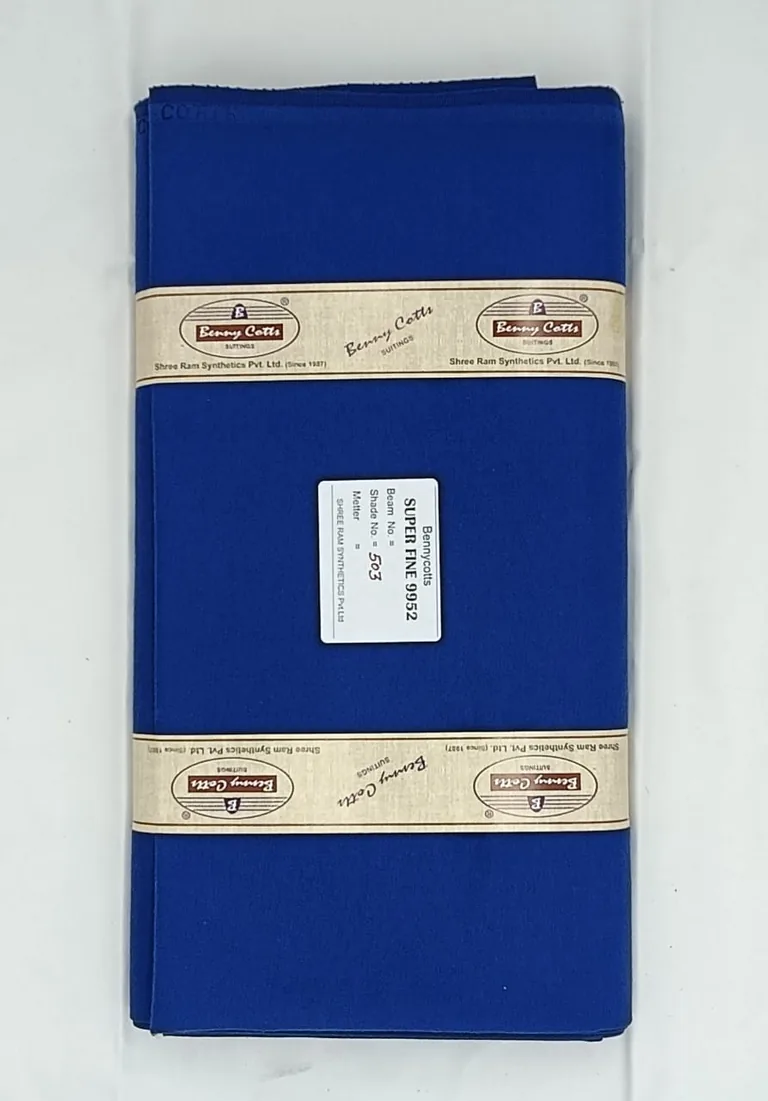
Super Fine 9952
100% Polyester (dyed) · 188 GSM
"Super Hit Quality": lightweight, fade-resistant dyed polyester for hospital uniform programs.
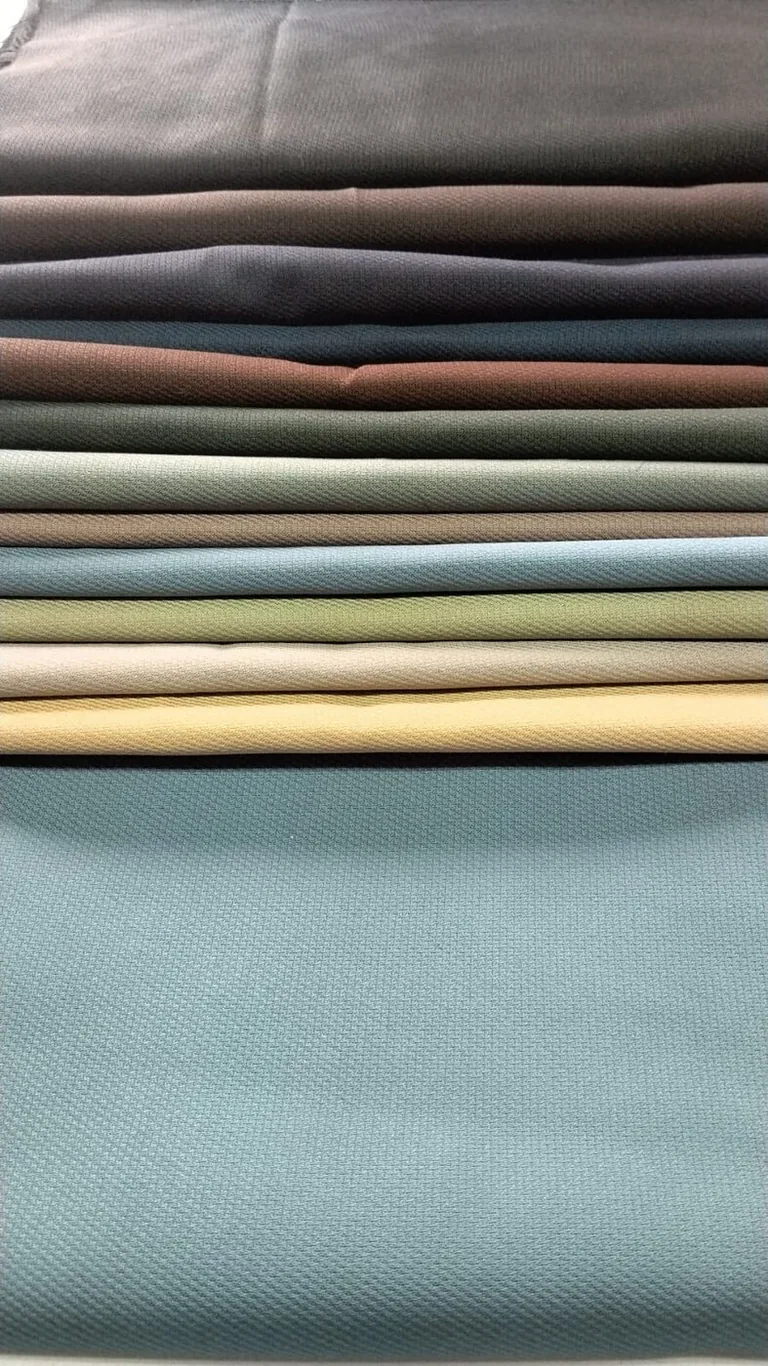
Focus
100% Polyester · 189 GSM
Mid-weight suiting from our formal range, stocked in multiple shades.
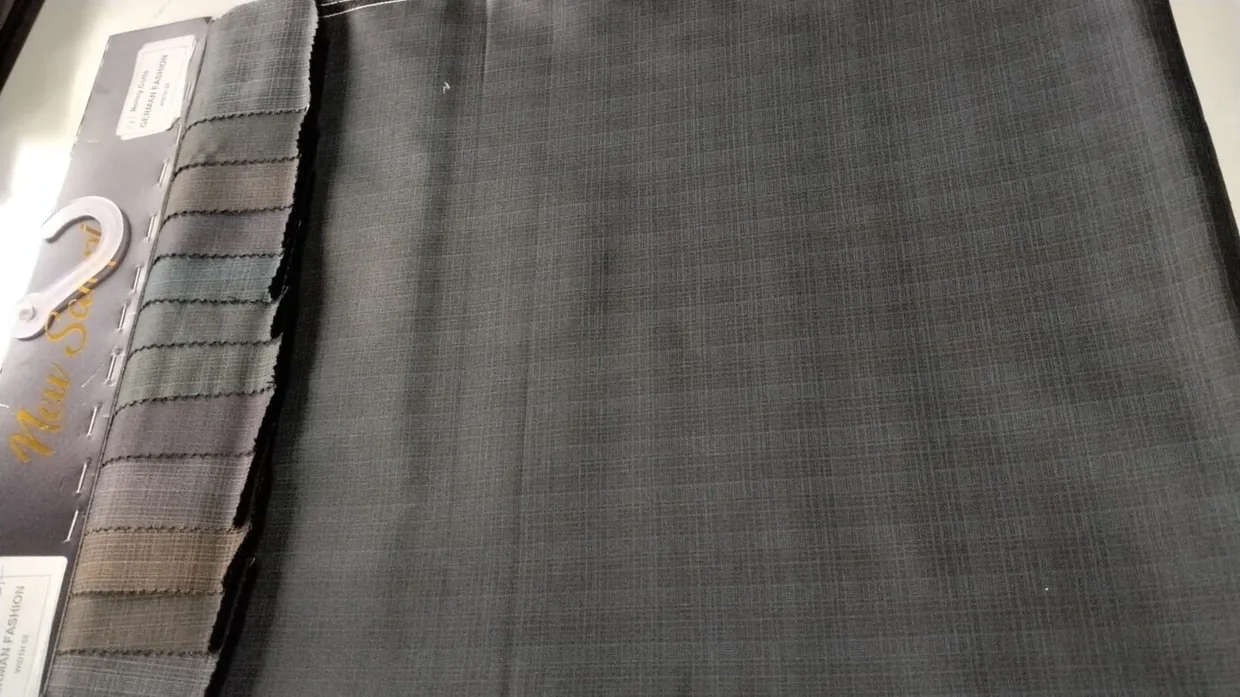
German Fashion
100% Polyester · 135 GSM
Lightweight charcoal suiting from our fancy range.
Industries this applies to
Uniform programs these fabrics are used for
Ready to place an enquiry?