
Fabric basics
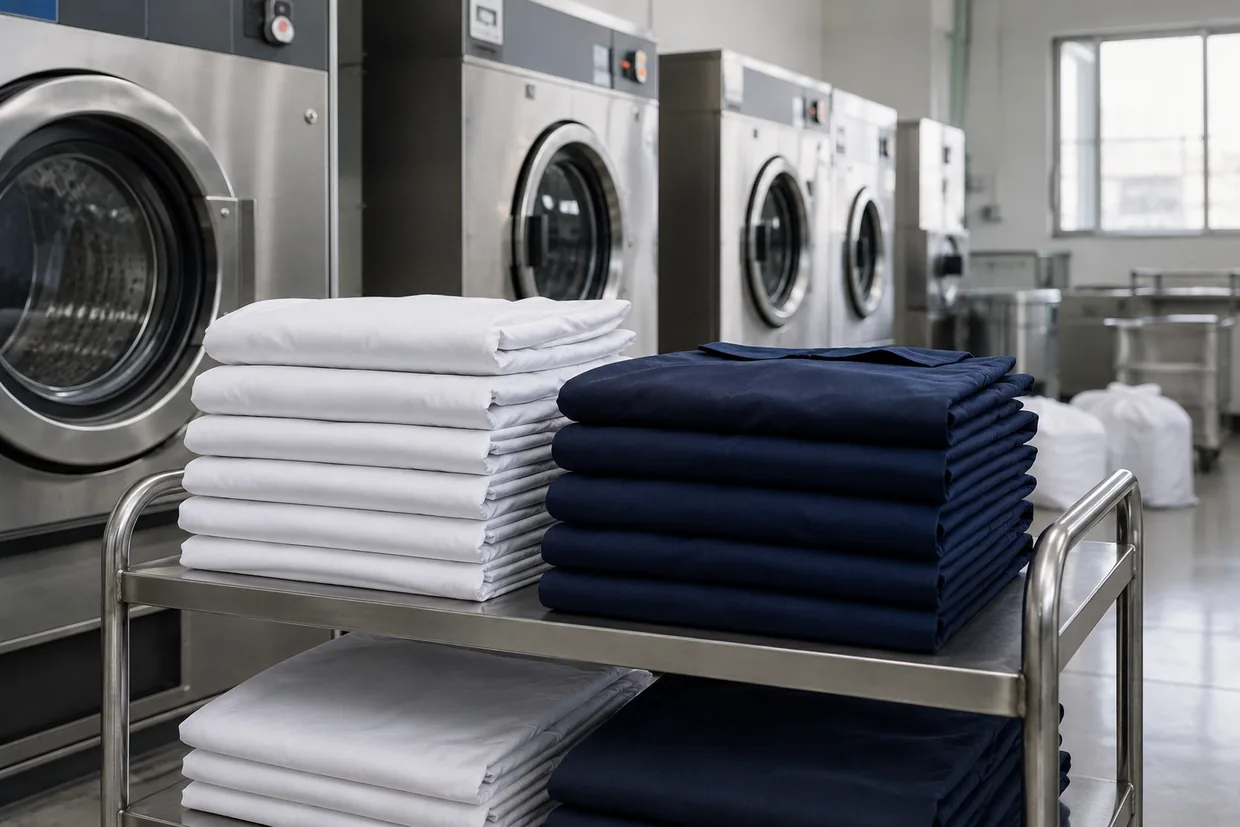
Why Uniforms Fade: Colour Fastness and Hot Washing
Why uniform fabric loses colour, what colour fastness means, and how to choose and launder fabric so shades hold through heavy institutional washing.
Jump to section
Quick answer
Uniforms fade because dye is lost to washing, light and rubbing over time. The defence is colour fastness: how well a fabric holds its shade against those forces. Choose a wash-fast poly-viscose engineered for hot laundering, wash cooler and inside-out where possible, and dry out of direct sun, and colour holds far longer through institutional use.
What colour fastness means
Colour fastness is a fabric's resistance to losing colour. It is measured separately against several forces: washing, light, rubbing (crocking) and perspiration. A fabric can be strong against one and weaker against another, which is why a uniform washed daily needs high wash fastness specifically.
Each of these is checked with its own test: a swatch goes through a standard wash, light-exposure or rubbing cycle and the colour change is scored on a numbered grey-scale, typically 1 (poor) to 5 (excellent). Asking for the grade behind a "colour-fast" claim, rather than the word alone, is how you tell a tested fabric from an untested one.
For institutional wear that means specifying a fabric engineered and tested for repeated hot laundering, not just any dyed cloth.
| Grade | What it means | Typical uniform use |
|---|---|---|
| 4-5 | Excellent: little to no visible colour change | Whites and light institutional shades under frequent hot washing |
| 3-4 | Good: minor change, acceptable for most programs | Standard corporate and school suiting shades |
| Below 3 | Poor: visible fading within normal wash cycles | Not recommended for hot-wash, high-frequency laundering |
The test methods behind a fastness grade
A grade only means something if you know which test produced it. Internationally the methods sit in the ISO 105 series, which is split into parts by the force being tested, so a fastness clause names the part rather than the series. The parts an institutional uniform buyer meets most often are these.
Two further parts are not tests at all but the scales used to read them. ISO 105-A02 is the grey scale for change in colour, the 1 to 5 scale quoted above, and ISO 105-A03 is the grey scale for staining, which rates how much colour transferred onto adjacent fabric rather than how much the specimen itself changed. A wash test therefore produces two separate numbers, and a specification that asks for only one leaves the other unstated.
| Method | What it tests | How it is run |
|---|---|---|
| ISO 105-C06 | Colour fastness to domestic and commercial laundering | Standard detergent, with a set of procedures covering different temperatures and severities |
| ISO 105-B02 | Colour fastness to artificial light | Xenon arc light representing daylight, rated against blue wool references |
| ISO 105-X12 | Colour fastness to rubbing, also called crocking | A rubbing cloth drawn across the fabric, run once dry and once wet |
| ISO 105-E04 | Colour fastness to perspiration | Acid and alkaline solutions, since sweat is tested both ways |
One trap is worth knowing: light fastness under ISO 105-B02 is rated against blue wool references on a 1 to 8 scale, while the grey scales run 1 to 5, so a light fastness of 6 and a wash fastness of 5 are not comparable figures and neither is a mistake. Read every grade against the scale its own method uses, confirm the current edition of the standard before quoting it, and cite the part, the scale and the minimum grade together. A grade quoted on its own cannot be checked, and cannot be enforced.
Why uniforms lose colour
- Hot, frequent washing: the biggest cause in medical, hospitality and housekeeping wear.
- Harsh detergents and bleach: strip dye faster, especially on darks.
- Direct sunlight: UV breaks down dye during outdoor wear and line drying.
- Rubbing (crocking): friction at cuffs, collars and seats lifts surface dye.
- Perspiration: sweat and body oils attack some dyes over time.
Choosing fabric that holds its colour
Poly-viscose blends take dyeing that survives industrial laundering better than untreated cotton, which is why uniform programs favour them. Look for a stated wash-fast finish on the spec sheet, and for outdoor roles factor in light fastness too.
Darker and saturated shades show fade sooner than mid-tones, so where a role is laundering-heavy, a mid institutional shade in a wash-fast PV blend is the most forgiving choice.
Laundering to make colour last
- Wash cooler where hygiene rules allow; heat accelerates dye loss.
- Turn garments inside-out to protect the outer surface from rubbing.
- Use a mild detergent and avoid chlorine bleach on coloured fabric.
- Dry in shade rather than direct sun to limit UV fade.
- Wash like colours together and avoid overloading the machine.
Benny Cotts fabrics built for the wash
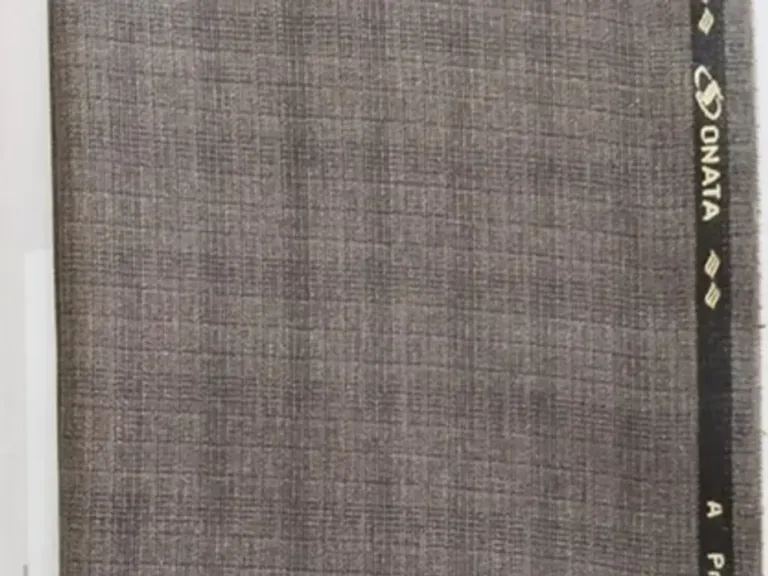
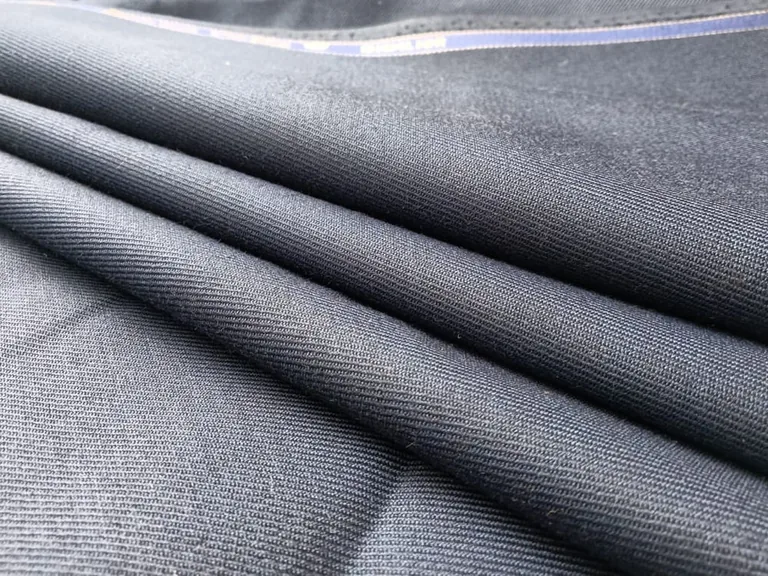
Our suitings are wash-fast poly-viscose blends engineered for institutional laundering. Officer Choice and Sonata hold their shade through repeated washing, and soft-handle Benzzi suits front-of-house roles where appearance must last. For clinical and housekeeping wear, where hot washing is constant, wash fastness is the spec that matters most.
FAQ
Frequently asked questions
- Why do dark uniforms fade faster?
- Saturated dark shades carry more dye at the surface, so any loss shows sooner. A wash-fast blend and cooler, inside-out washing slow it considerably.
- Does hot washing always cause fading?
- Heat accelerates dye loss, but a fabric engineered wash-fast for institutional laundering resists it far better. Where hot washing is required for hygiene, specify high wash fastness.
- Is poly-viscose more colour-fast than cotton?
- Generally yes. PV blends accept dyeing that survives repeated hot washing better than untreated cotton, which is a key reason uniforms use them.
- Which fabrics do you recommend for heavy laundering?
- Wash-fast PV suitings such as Officer Choice and Sonata for structured wear, and soft-handle Benzzi for front-of-house roles. All are engineered for institutional wash cycles.
- What does the colour fastness grading scale actually mean?
- Fastness is graded on a 1 to 5 grey-scale, where 5 shows almost no colour change and below 3 shows visible fading within normal wash cycles. For institutional wear washed hot and often, look for a grade of 4 to 5 rather than accepting an untested colour-fast claim on its own.
- Does sunlight fade uniforms the same way washing does?
- No, light fastness and wash fastness are tested and rated separately. UV exposure breaks down dye over time through outdoor wear and line drying, so roles that spend time outside need a fabric checked for light fastness in addition to wash fastness.
- Which standard covers colour fastness testing?
- Internationally it is the ISO 105 series, divided into parts by what is being tested: ISO 105-C06 for domestic and commercial laundering, ISO 105-B02 for artificial light, ISO 105-X12 for rubbing, and ISO 105-E04 for perspiration. The grey scales used to read the results are themselves parts of the series, ISO 105-A02 for change in colour and ISO 105-A03 for staining. A fastness clause should name the part rather than the series, because the series alone does not say which force was tested. Editions are revised, so confirm the current one before quoting it in a tender.
- Is a light fastness grade of 6 better than a wash fastness grade of 5?
- They are not on the same scale, so the two numbers cannot be ranked against each other. Light fastness under ISO 105-B02 is rated against blue wool references from 1 to 8, while the grey scales for change in colour and staining run from 1 to 5. A 5 on a grey scale is the top of that scale, whereas a 6 on blue wool has two steps above it. Always read a grade together with the method that produced it.
- What fastness grades should a uniform specification ask for?
- A workable floor for institutional uniform fabric is grade 4 or better for colour change and staining in washing (ISO 105-C06), grade 4 for dry rubbing and 3 to 4 for wet rubbing on very dark shades (ISO 105-X12), grade 4 for perspiration (ISO 105-E04), and 4 to 5 on the blue wool scale for light (ISO 105-B02). Name the method next to every grade, set the wash test temperature to the one your laundry actually runs, and ask for the report before award rather than after.
Cite this guide
Quoting this page? Paste the line below so the credit links back.
<a href="https://www.bennycotts.com/guides/why-uniform-fabrics-fade">Why Uniforms Fade: Colour Fastness and Hot Washing</a>, Benny Cotts, 2026Updated 3 September 2026 · Benny Cotts, Bhilwara
Fabrics
Fabrics mentioned in this guide
Spec, price and MOQ on every fabric page.

Officer Choice
Poly-Viscose (PV) blend · 210-230 GSM
Crisp, structured suiting engineered for officer uniforms.
Sonata
Poly-Viscose blend · 190-210 GSM
Cost-efficient uniform fabric without compromising weave quality.
Benzzi
Poly-Viscose blend · 200-215 GSM
Soft-handle suiting suited to all-day wear.
Super Fine 9952
100% Polyester (dyed) · 188 GSM
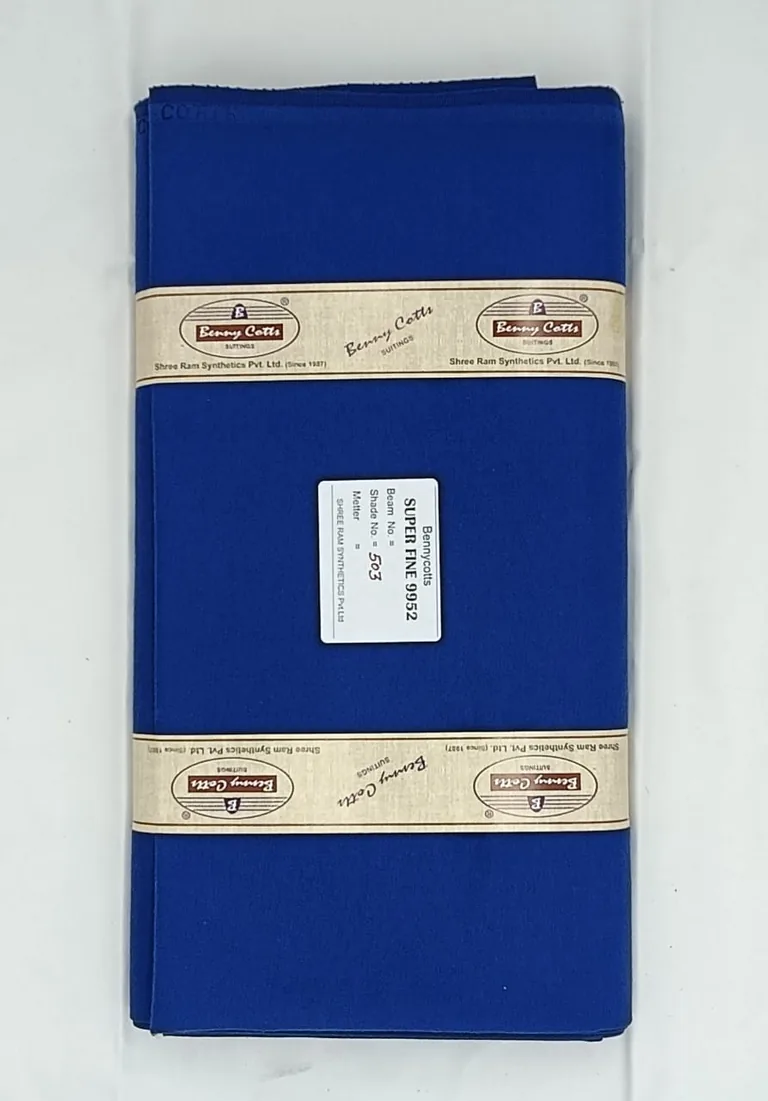
"Super Hit Quality": lightweight, fade-resistant dyed polyester for hospital uniform programs.
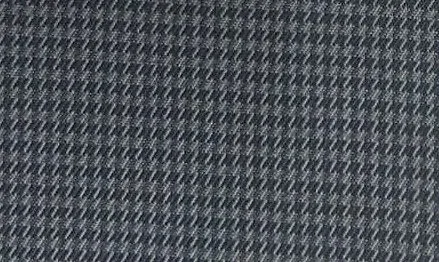
Colour-5555
100% Polyester · 188 GSM
Colour-fast polyester trovin in a mid-weight everyday uniform cloth.
Industries this applies to
Uniform programs these fabrics are used for
- Fabric for Corporate Uniforms
- Fabric for Corporate Shirts
- Fabric for Corporate Trousers
- Fabric for School Uniforms
- Fabric for Sports & PT Uniforms
- Fabric for Pre-School & Kindergarten Uniforms
- Fabric for Doctor Coats
- Fabric for Nurse Scrubs
- Fabric for Lab Coats
- Fabric for OT & Surgical Wear
- Fabric for Patient Gowns
- Fabric for Hospital Staff Uniforms
- Fabric for Hotel Uniforms
- Fabric for Chef Coats
- Fabric for Waiter Uniforms
- Fabric for Salon & Spa Uniforms
- Fabric for Ground Staff Uniforms
- Fabric for Army Uniforms
- Fabric for Police Uniforms
- Fabric for Security Guard Uniforms
- Fabric for Industrial Uniforms
- Fabric for Construction Workwear
- Fabric for Housekeeping Uniforms
Fabric types covered here
Keep reading
Related guides


Ready to place an enquiry?