
Buying guide
ISI Marks, QCOs and Indian Standards for Uniform Fabric
What a Quality Control Order actually is, why an ISI mark is not the right thing to ask a suiting mill for, and how to check the current position yourself before writing it into a tender.
Jump to section
Quick answer
A Quality Control Order makes BIS certification and the ISI mark compulsory for a specific notified product. Most of the textile QCOs sit upstream on fiber, yarn and packaging sacks rather than on woven suiting and shirting, so asking a suiting mill for an ISI mark is usually asking for something that does not exist for that product. The position moves, so check the current QCO list before you write it into a tender.
What a QCO actually does
A Quality Control Order is a notification that makes conformity to a named Indian Standard compulsory for a named product. Once a product is under a QCO it cannot be manufactured, imported, stored for sale or sold in India without BIS certification, and it carries the ISI mark.
That is a different thing from an Indian Standard existing. Thousands of IS documents exist and almost all of them are voluntary. A standard becomes compulsory only when a QCO names it. So the question is never "is there an IS for this fabric", it is "is this product under a QCO".
Why the distinction bites on a uniform fabric tender
Tender documents sometimes ask for an ISI mark on woven uniform suiting. The textile QCOs notified so far sit mostly upstream, on fiber, yarn and industrial packaging sacks, rather than on woven suiting and shirting cloth. A mill weaving poly-viscose suiting therefore has no ISI mark to give you for the fabric, because the product is not notified.
The consequence is practical. A clause demanding something that cannot exist either disqualifies every honest bidder or gets quietly ignored, and neither outcome protects the buyer. Specifying measurable fabric parameters and a test report against them does protect the buyer.
The upstream QCOs, and why we are not listing them here
The QCOs covering polyester fiber and yarn have been through withdrawal, litigation and partial revival during 2025 and 2026, with more than one High Court order pointing in different directions and matters still pending. Any list of which yarn QCOs are live, printed on a web page, is wrong within months.
So this guide deliberately does not print one. If your tender or your import turns on whether a particular fiber or yarn is currently notified, check it on the day, at source, and keep a dated copy of what you saw.
The exception worth knowing sits downstream of us. The Medical Textiles (Quality Control) Order, 2024, notified as S.O. 4634(E) on 23 October 2024, puts finished bed sheets and pillow covers for medical use under IS 17630:2021 with a compulsory Standard Mark. That obligation lands on the unit that stitches the sheets, not on the woven cloth, and goods for export are excluded. If you convert our hospital bed sheet fabric into sheets for Indian hospitals, that is the one textile QCO you are actually inside.
How to check the current position yourself
- The BIS site publishes the list of products under Quality Control Orders. That list, not a supplier's summary, is the authority on whether your product is notified.
- The BIS standards catalogue at standards.bis.gov.in tells you whether a given IS number is current, revised or withdrawn. Standards get superseded, and old numbers circulate in tender templates for years afterwards.
- Check the date on whatever you are reading. A QCO position from last year is not evidence of this year's position.
- If a clause in a draft tender asks for an ISI mark on woven fabric, raise it in the pre-bid query window rather than after award.
The standard most often cited for uniform suiting
The Indian Standard buyers most often cite for this product is IS 15853, retitled by a 2012 amendment as polyester blended woven suiting for uniforms. It sets numeric requirements for width, mass, blend composition, thread counts, strength, dimensional change, crease recovery, pilling and colour fastness, and it supersedes several older suiting standards whose numbers still turn up in old tender templates.
Being cited is not the same as being compulsory. IS 15853 is a voluntary product standard unless a contract or a QCO makes it binding, and a tender can make it binding simply by writing it into the specification. Confirm the current edition before quoting any value from it.
For what a tender pack has to contain beyond the fabric specification, see our guide on tender documentation for uniform fabric.
What to ask a mill for instead of an ISI mark
- A written specification: composition, GSM, width, weave, and the finish applied.
- A test report against the parameters that matter to your programme, from an independent accredited laboratory where the contract requires accredited results.
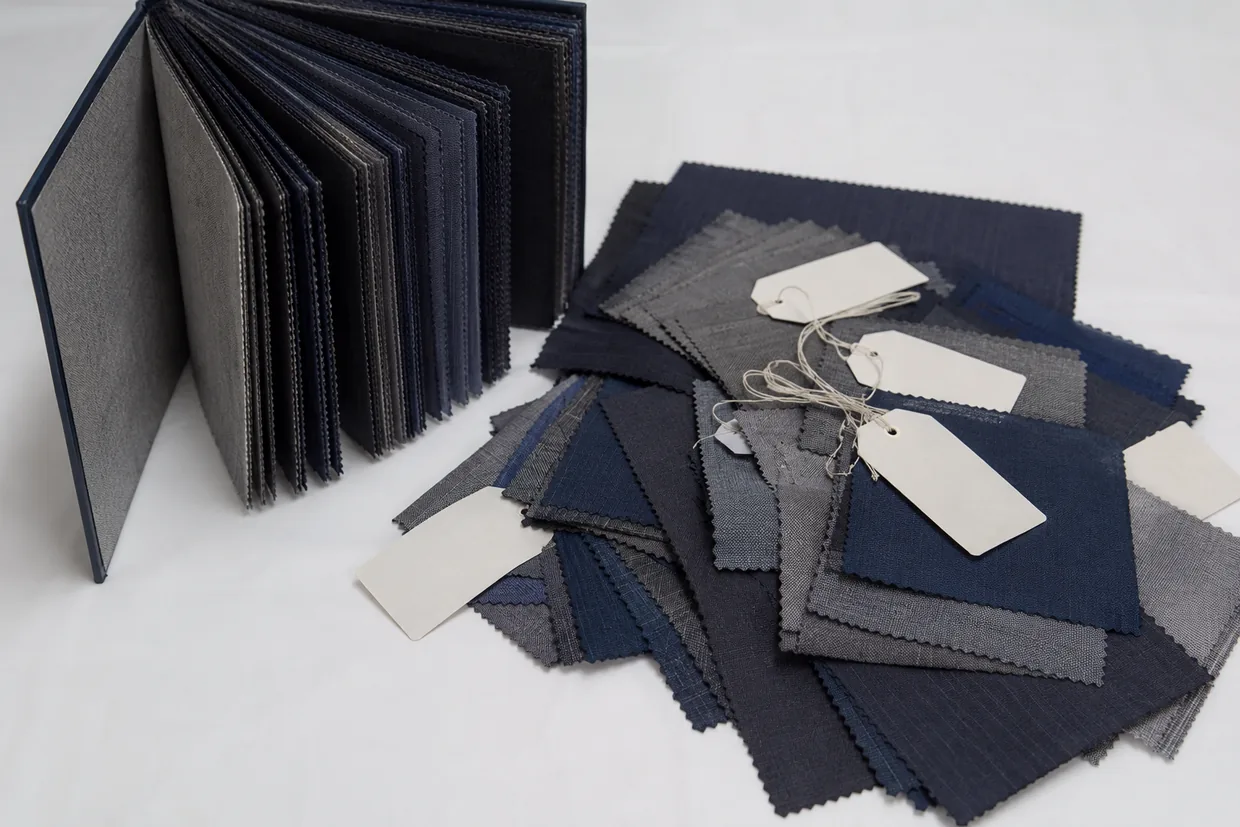
- A physical reference swatch for the approved shade, held on both sides, so reorders are matched against a standard rather than against the last delivery.
- A straight answer on which stages the mill performs itself and which run through processing partners.
We are ISO 9001:2015 certified for our quality management system. That is a management-system certificate, not a product certification and not a laboratory accreditation, and we do not hold either of those. Where a programme needs accredited test results we route the testing to an independent accredited laboratory and supply the sample length. Our guide on how we test our fabric sets out what we check at each stage.
FAQ
Frequently asked questions
- Can you supply ISI-marked uniform suiting?
- The ISI mark applies to products notified under a Quality Control Order, and woven uniform suiting has not been notified in the way fiber, yarn and packaging sacks have. So there is no ISI mark to issue for the fabric itself. What we can supply is a written specification and, where your contract requires it, test results from an independent accredited laboratory.
- Our tender asks for an ISI mark on the fabric. What do we do?
- Raise it as a pre-bid query rather than after award. In most cases the clause has been copied from an older template. The workable substitute is a measurable fabric specification plus a test report against it.
- Is IS 15853 compulsory?
- Not by itself. It is a voluntary Indian Standard for polyester blended woven suiting for uniforms. It becomes binding on a particular order when a contract or tender writes it into the specification. Confirm the current edition before quoting values from it.
- How do I check whether a fiber or yarn is currently under a QCO?
- Check the BIS list of products under Quality Control Orders on the day you need the answer, and keep a dated copy. This area has moved repeatedly through 2025 and 2026 and any summary published elsewhere, including this page, can go out of date.
- Does an ISO 9001 certificate mean the fabric is certified?
- No. ISO 9001 certifies a quality management system within a defined scope. It says how an organisation runs its processes, not that a given batch of cloth meets a product standard. Those are separate claims and should be asked for separately.
Sources
Primary documents
The government and inter-governmental documents behind the dates and figures above, so you can read them yourself. Anything attributed to trade press or to a research note is named in the copy rather than linked here.
- 1. Bureau of Indian Standards, upcoming Quality Control Orders notified and due for implementation (Live table; the textile-labelled rows are the ones to read against this guide.)
Cite this guide
Quoting this page? Paste the line below so the credit links back.
<a href="https://www.bennycotts.com/guides/bis-qco-uniform-fabric-scope">ISI Marks, QCOs and Indian Standards for Uniform Fabric</a>, Benny Cotts, 2026Updated 3 September 2026 · Benny Cotts, Bhilwara
Fabrics
Fabrics mentioned in this guide
Spec, price and MOQ on every fabric page.
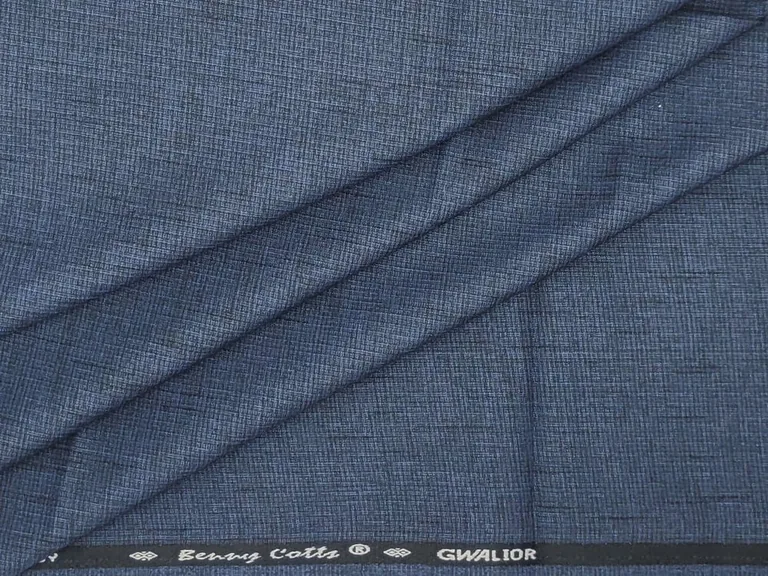
Nano
Poly-Viscose blend · 180-200 GSM
Our entry-level uniform fabric for large-volume programs.
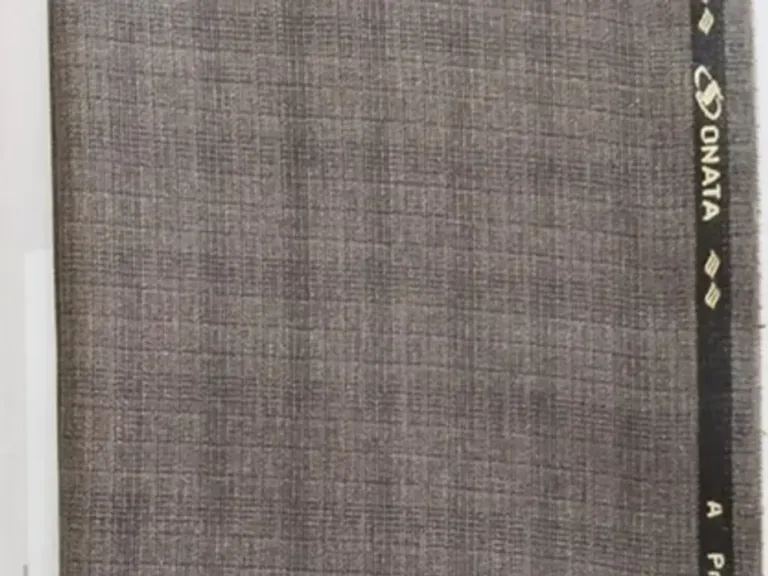
Sonata
Poly-Viscose blend · 190-210 GSM
Cost-efficient uniform fabric without compromising weave quality.
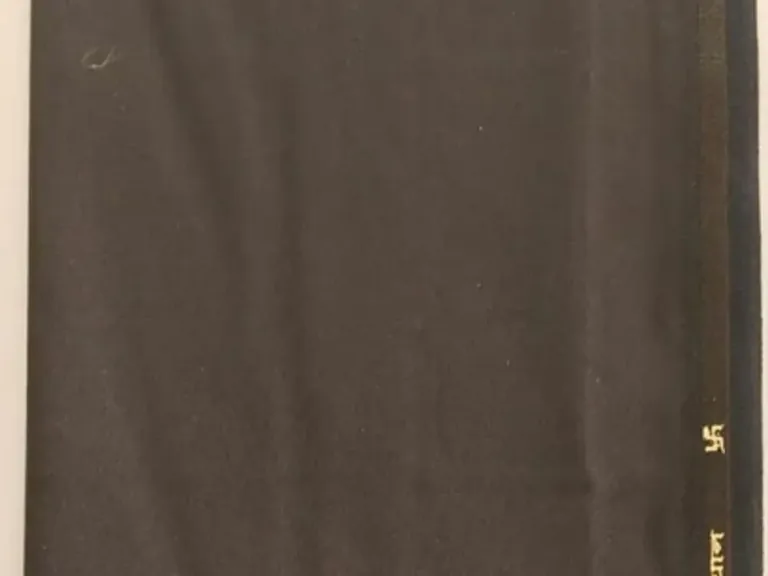
Grado 1st
Poly-Viscose blend · 220-240 GSM
Tailoring-grade fabric built for everyday durability.
Industries this applies to
Uniform programs these fabrics are used for
- Fabric for Business Attire
- Fabric for Corporate Uniforms
- Fabric for Corporate Shirts
- Fabric for Corporate Trousers
- Fabric for Blazers & Waistcoats
- Fabric for School Uniforms
- Fabric for College & University Uniforms
- Fabric for Sports & PT Uniforms
- Fabric for Pre-School & Kindergarten Uniforms
- Fabric for Doctor Coats
- Fabric for Nurse Scrubs
- Fabric for Lab Coats
- Fabric for OT & Surgical Wear
- Fabric for Patient Gowns
- Fabric for Hospital Staff Uniforms
- Fabric for Chef Coats
- Fabric for Salon & Spa Uniforms
- Fabric for Cabin Crew Uniforms
- Fabric for Ground Staff Uniforms
- Fabric for Army Uniforms
- Fabric for Police Uniforms
- Fabric for Security Guard Uniforms
- Fabric for Industrial Uniforms
- Fabric for Construction Workwear
- Fabric for Housekeeping Uniforms
- Fabric for Business Suits
- Fabric for Black-Tie Attire
- Fabric for Formal Event Wear
Fabric types covered here
Keep reading
Related guides
Ready to place an enquiry?