
Buying guide
Uniform Fabric MOQ in India, Explained
What minimum order quantities mean when buying uniform fabric in India, why mills set them, and how to start a program from just 50 m.
Jump to section
Quick answer
Most Indian mills ask for 500 to 1,000 meters per shade when they weave fabric to order, because every dye lot and loom setup is a batch. At Benny Cotts the minimum is 50 m per shade from ready stock, and 500 m per shade for custom shades or constructions woven to order.
Why mills have minimum order quantities
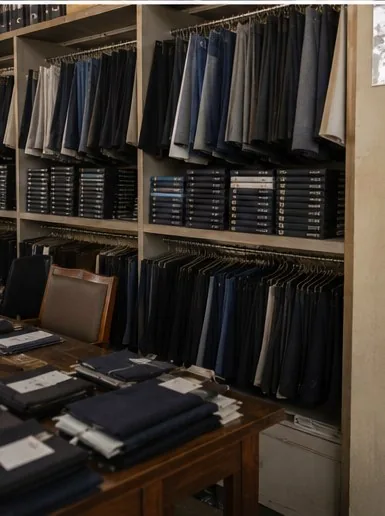
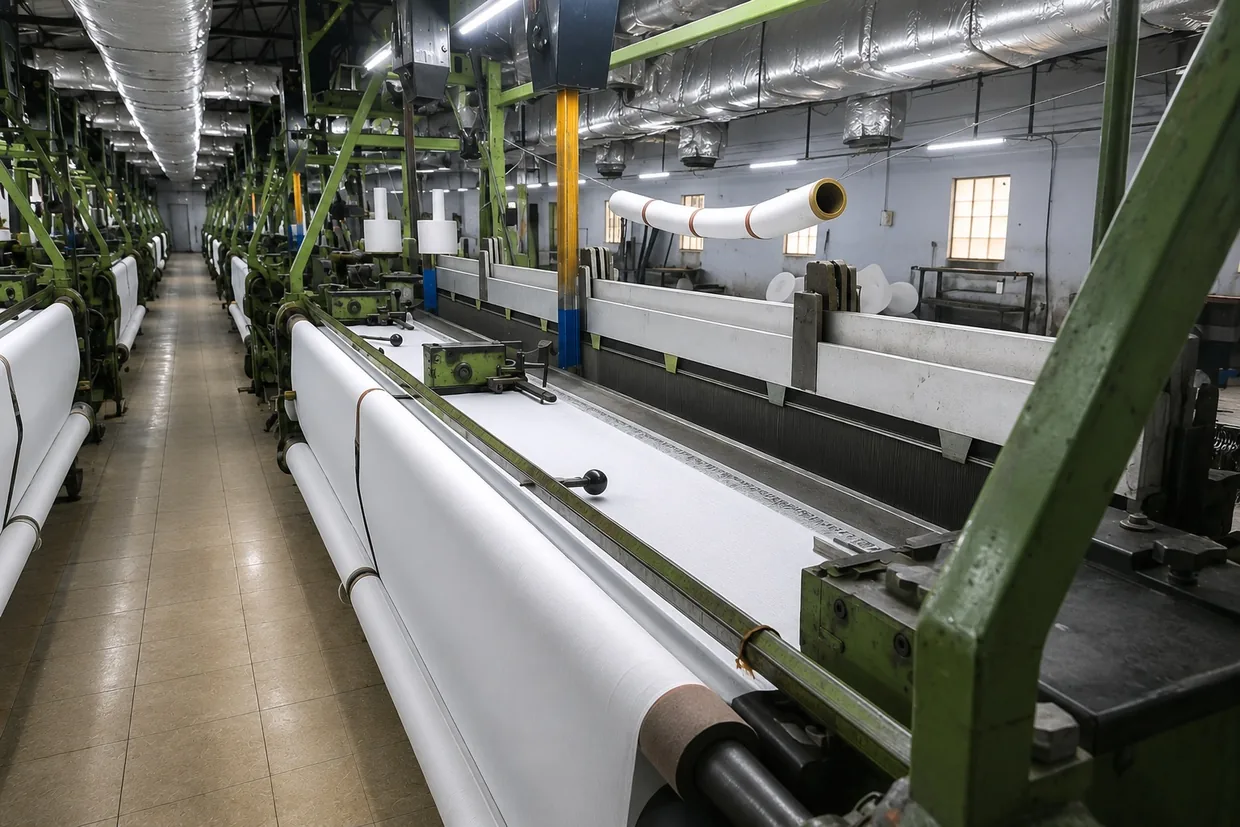
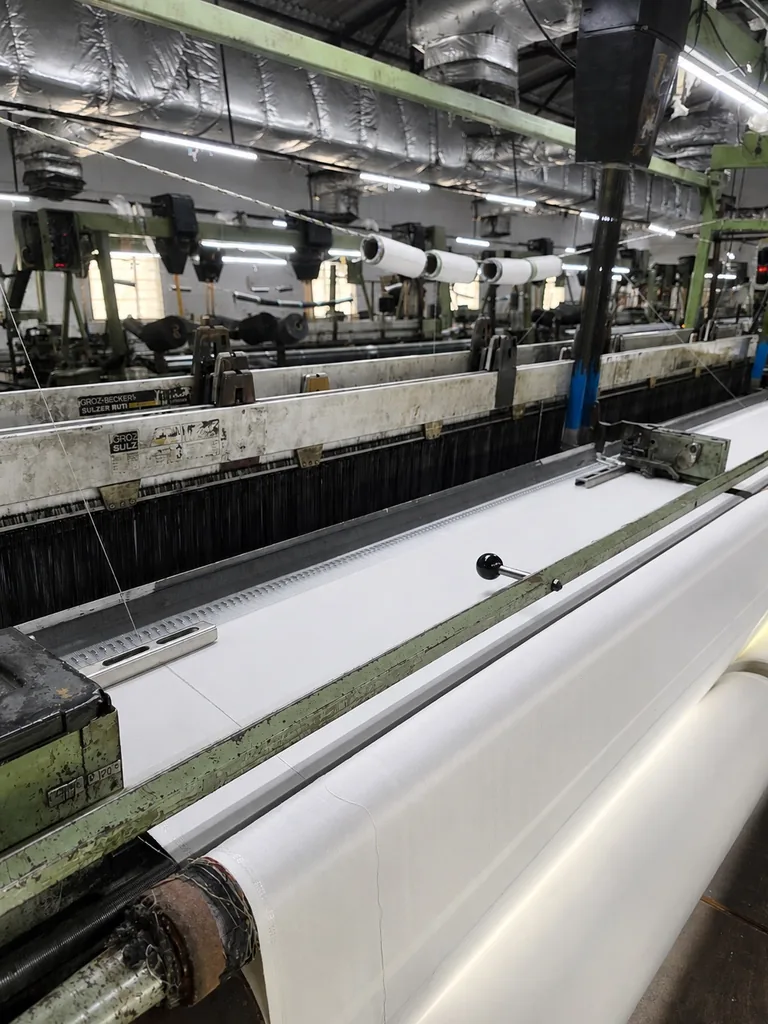
A minimum order quantity (MOQ) is not a sales tactic. Weaving runs in batches: yarn is dyed in lots, warps are beamed for a full run, and looms are set up per construction. Running a loom for a short length costs nearly as much as running it for a full batch, so the mill sets a floor where the economics work.
Dyeing drives the number more than weaving. A dye lot is mixed, matched and fixed as one batch, and producing 100 m of a custom shade uses almost the same labour, water and chemistry as 500 m. That is why custom shades carry higher minimums than ready-stock shades.
Typical MOQs in the Indian fabric market
Numbers vary by mill and construction, but for uniform suitings in India you will usually see three tiers.
| Order type | Typical MOQ | Best for |
|---|---|---|
| Ready stock (running shades) | 50-150 m | Trials, small tailors, top-up orders |
| Custom shade, standard construction | 500-1,000 m | School and corporate programs with a fixed shade |
| Custom construction (weave, blend or finish) | 1,000 m+ | Large institutional and force contracts |
Traders sometimes quote lower minimums than mills, but the fabric then comes from whatever lot happens to be available, which makes shade matching on reorders unreliable.
How the Benny Cotts two-tier MOQ works
Our policy is deliberately simple. From ready stock you can order from 50 m per shade: pick a running shade of any catalogue fabric and we despatch from the current lot. For a custom shade or construction we weave to order from 500 m per shade, with your shade matched and locked as its own dye lot.
Width varies by quality rather than being one number across the catalogue: most run 147 cm (58 inch), several are 150 cm, and the narrower shirting and lining cloths run 142, 91 or 89 cm. Confirm the width on the product page or spec sheet before you convert meters into garments. We quote per meter against your shade, quantity and finish, so you can work out program costs when you enquire.
Worked example: a 200-person uniform program
Say a company needs trousers and a shirt for 200 employees, two sets each. A trouser typically takes 1.2 to 1.4 m of 147 to 150 cm fabric and a shirt 1.6 to 1.8 m, so one set is roughly 3 m. Two sets for 200 people is about 1,200 m, comfortably above the custom MOQ. The program runs in its own dye lot, and the shade is locked for reorders.
A 40-student batch, by contrast, may need only 250 m. That fits the ready-stock tier: choose a running shade and order exactly what you need from 50 m.
How to start below the MOQ
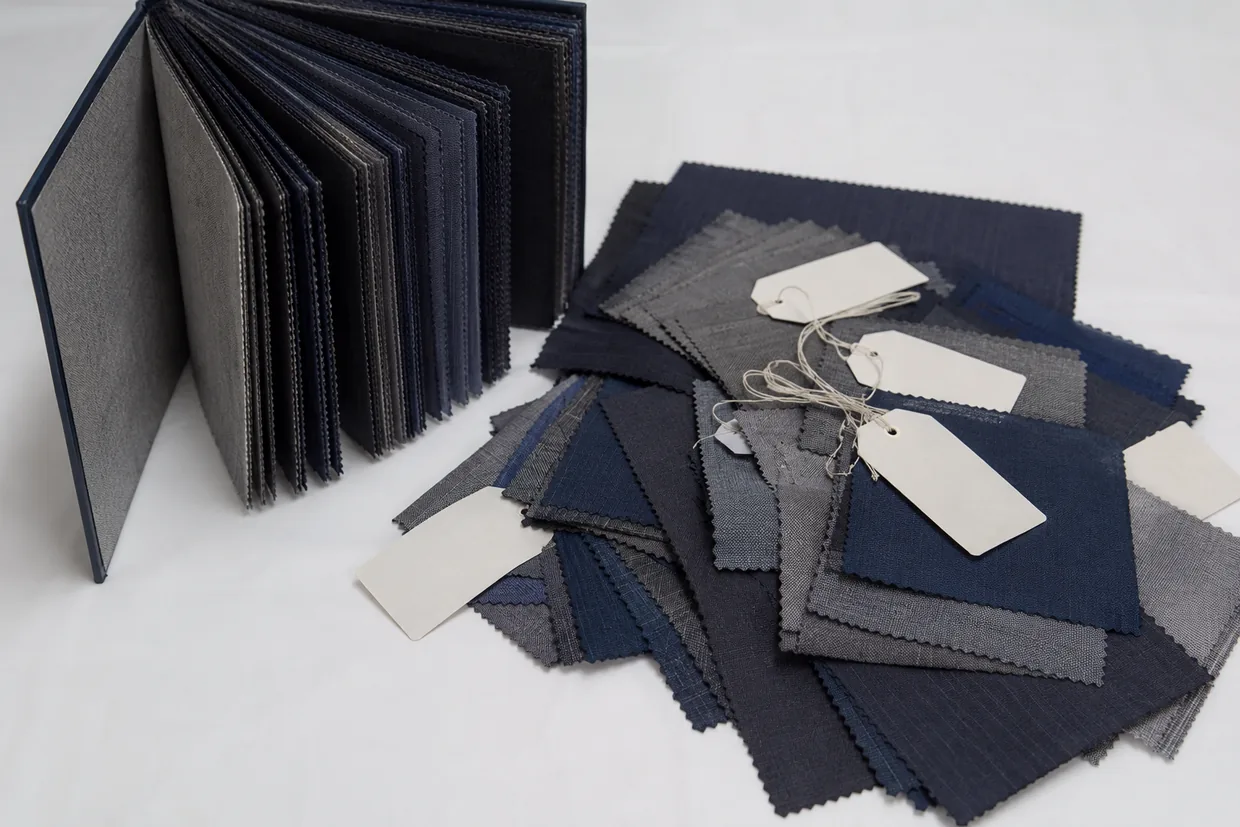
- Ask for a shade card and swatches first; sampling is available on request.
- Run a trial from ready stock (50 m) before committing to a program shade.
- Pool garments into one shade where possible; MOQ applies per shade, not per garment.
- Plan reorders against the same custom lot so repeat lengths match.
FAQ
Frequently asked questions
- What is the minimum order at Benny Cotts?
- 50 m per shade from ready stock, and 500 m per shade for custom shades or constructions woven to order.
- Does the MOQ apply per order or per shade?
- Per shade. Each shade is its own dye lot, so a 600 m order split across four shades does not meet a 500 m custom MOQ for any one of them.
- Can I get samples before ordering?
- Yes. Swatches and shade cards are available on request, and a WhatsApp message is the fastest way to ask.
- Why is custom fabric more expensive in small runs?
- Because dyeing and loom setup are batch costs. Spread over 500 m they are minor; over 100 m they dominate the price.
- How much fabric does a typical program need to clear the custom MOQ?
- A 200-person program ordering two trouser-and-shirt sets each needs around 1,200 m, well past the 500 m custom threshold, while a 40-student batch needing one set each is closer to 250 m and fits comfortably within the 50 m ready-stock tier.
- What width does Benny Cotts fabric ship in?
- It depends on the quality. Most of our fabrics are woven at 147 cm (58 inch), several suitings are 150 cm, and the narrower shirting and lining cloths run 142, 91 or 89 cm. The width is the same whether you order from ready stock or a custom shade woven to order, but it is not the same across the catalogue, so check the width on the product page or spec sheet before you work out yardage.
Cite this guide
Quoting this page? Paste the line below so the credit links back.
<a href="https://www.bennycotts.com/guides/uniform-fabric-moq-india">Uniform Fabric MOQ in India, Explained</a>, Benny Cotts, 2026Updated 8 July 2026 · Benny Cotts, Bhilwara
Fabrics
Fabrics mentioned in this guide
Spec, price and MOQ on every fabric page.
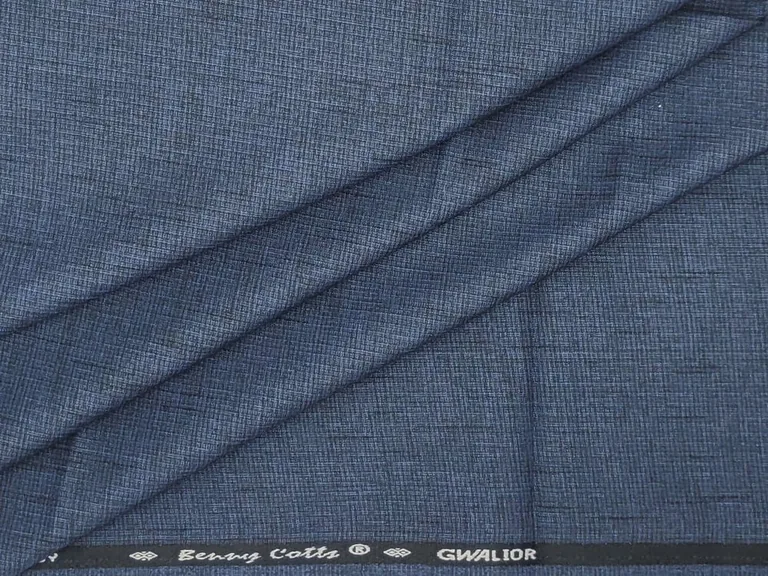
Nano
Poly-Viscose blend · 180-200 GSM
Our entry-level uniform fabric for large-volume programs.
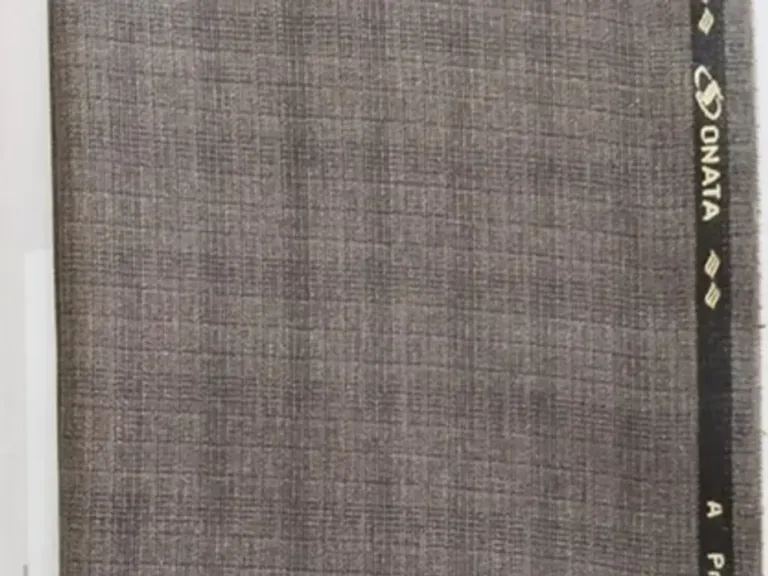
Sonata
Poly-Viscose blend · 190-210 GSM
Cost-efficient uniform fabric without compromising weave quality.
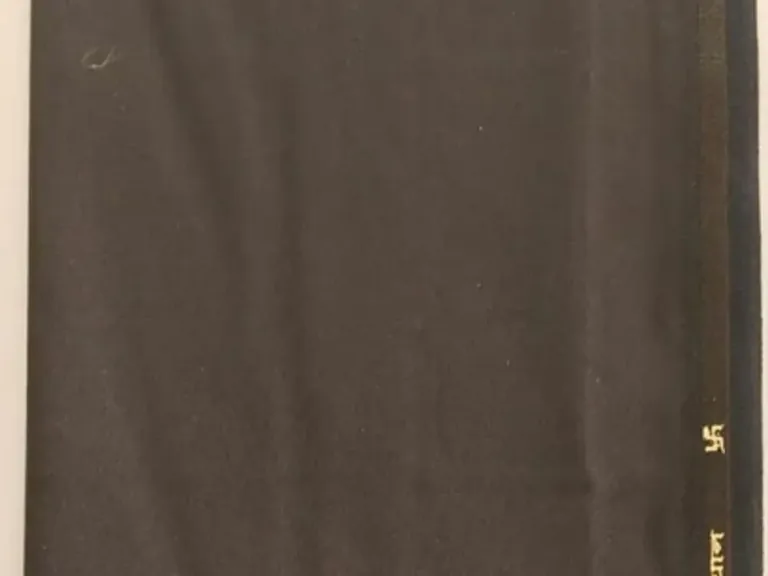
Grado 1st
Poly-Viscose blend · 220-240 GSM
Tailoring-grade fabric built for everyday durability.
Industries this applies to
Uniform programs these fabrics are used for
- Fabric for Business Attire
- Fabric for Corporate Uniforms
- Fabric for Corporate Shirts
- Fabric for Corporate Trousers
- Fabric for Blazers & Waistcoats
- Fabric for School Uniforms
- Fabric for College & University Uniforms
- Fabric for Sports & PT Uniforms
- Fabric for Pre-School & Kindergarten Uniforms
- Fabric for Doctor Coats
- Fabric for Nurse Scrubs
- Fabric for Lab Coats
- Fabric for OT & Surgical Wear
- Fabric for Patient Gowns
- Fabric for Hospital Staff Uniforms
- Fabric for Chef Coats
- Fabric for Salon & Spa Uniforms
- Fabric for Cabin Crew Uniforms
- Fabric for Ground Staff Uniforms
- Fabric for Army Uniforms
- Fabric for Police Uniforms
- Fabric for Security Guard Uniforms
- Fabric for Industrial Uniforms
- Fabric for Construction Workwear
- Fabric for Housekeeping Uniforms
- Fabric for Business Suits
- Fabric for Black-Tie Attire
- Fabric for Formal Event Wear
Fabric types covered here
Keep reading
Related guides
Ready to place an enquiry?