
Export markets
Indian Garment Makers Are Moving Orders From the US to the UK and EU. What It Means for Buyers
Indian garment exporters are deliberately cutting how much they depend on the US and moving sales to the UK and Europe, Reuters reported on 11 November 2026, and they describe it as a lasting change rather than a wait for a trade deal. Between April and August, Indian textile and apparel exports to the US fell 9.8 percent while shipments to other markets rose 3.7 percent. What that shift means for a buyer in the US, in the UK and in the EU, and for anyone sourcing the fabric behind those garments.

Jump to section
What was reported
- Reuters, in a report carried by Business Standard on 11 November 2026, visited garment factories in and around Ranchi and spoke to exporters who have cut their reliance on the US since US tariffs on Indian goods rose to as much as 50 percent in 2025. One founder said the US now takes under 10 percent of his company's sales, against 84 percent before the tariffs, with the rest moved to Britain, Europe and, to a lesser extent, India.
- One of India's largest garment exporters told Reuters it plans to raise Europe's share of its revenue from 15 to 16 percent to 25 to 30 percent over three to five years, and cut the US share from 50 to 55 percent to 35 to 40 percent. Its managing director said: "It is not a temporary shift."
- In April to August 2026, India's textile, apparel and home-furnishing exports to the US fell 9.8 percent to 4.0 billion dollars, while shipments to other markets rose 3.7 percent to 15.2 billion dollars, according to the Global Trade Research Initiative, a Delhi think tank, as cited by Reuters. Industry estimates put the US share of these exports at 25.4 percent at the end of August, down from 28.3 percent in 2022.
- The chairman of the Apparel Export Promotion Council named Germany, France, Italy and the Netherlands as key targets. The secretary general of the Confederation of Indian Textile Industry called diversification "a structural strategy" for exporters heavily exposed to the US.
- Exporters also said they would not leave the US altogether, given its size and long buyer relationships, but that it was unlikely to regain its former dominance even if duties eased.
Why the shift is happening now
The tariff peak has passed. US duties on Indian goods are currently 10 percent under Section 301 on top of ordinary US duty rates of roughly 6 to 12 percent, Reuters reported, which matches what we set out in The US Tariff on Indian Textiles Has a Published Number Again. The exporters' point is that the number moved several times in eighteen months, and a business that sends most of its output to one market cannot plan around a duty that might move again.
The other side of it is margin. Exporters told Reuters that after the 2025 tariff announcements US buyers cancelled orders or asked for discounts, some asking suppliers to absorb a quarter of the duty, when garment margins were under 10 percent. Meanwhile Indian clothing has entered the UK duty free since the India-UK agreement came into force in July, and the India-EU agreement, expected to be signed in December, would remove EU duties that Reuters put at 12 to 17 percent on clothing.
If you buy from India for the US
Do not expect the discounts of 2025 to come back. An exporter that has cut its US exposure no longer needs any single US order badly enough to absorb part of your duty, and the ones Reuters spoke to said that request was what pushed them away. Expect duty to be quoted as yours, under whatever Incoterm you buy on.
The volume figures cut both ways. US apparel imports from India fell by about a quarter by value in January to August, which we covered in US Garment Imports From India Fell a Quarter in 2026. A smaller US book at an Indian factory does not mean idle lines; on this reporting, those lines are going to UK, European and domestic orders.
If you buy for the UK or EU
More Indian garment makers will be asking for your business, and that is good for a buyer: more choice, more willingness to sample and to take a first small order. The UK duty is already zero for goods that meet the origin rules, and the EU duty falls to zero only once the agreement is in force, targeted for 2027, so until then the duty still applies to an EU order.
Two cautions. First, origin decides the duty, not the factory's address: a UK preference has to be claimed with proof, which we set out for woven cloth in UK CETA origin rules. Ask a new supplier how they will prove origin before you plan a landed cost around zero duty. Second, if many exporters aim at the same European season, slots fill earlier. If your programme has a fixed issue date, book it early rather than assuming new capacity means short lead times. Uniform fabric lead times shows where the weeks go.
If you buy the fabric behind those garments
Garments bound for the UK and EU still need cloth, and a garment maker that wants a preference has an origin claim to make that starts with the fabric. Woven fabric made in India, woven from yarn, is the simplest base for that claim. If you are a garment maker moving a programme from the US to Europe, raise origin, shade continuity across reorders and test reports with your fabric mill at the start, not at shipment. Our guide to importing uniform fabric from India covers the paperwork.
What we are not claiming
- That Indian garments or fabric will be cheaper in Europe. Nothing in this reporting is about price levels, and we do not publish ours.
- That the company figures above apply to the whole industry. They are what individual exporters told Reuters, and we have kept their names out of this post.
- That the April to August split is official trade data. It is the Global Trade Research Initiative's figure as reported by Reuters; we have not matched it line by line against government releases.
What we are watching
India's October trade data, due in mid-November, for whether the US share keeps falling; any change to the US Section 301 rate or a signed India-US agreement; and the India-EU signing in December, which decides when the EU duty actually reaches zero. If any of these changes the picture, we will say so here.
13 November 2026: the October data is out. India's total goods exports to the US rose 39.25 percent year on year, and garment exports to all markets rose 20.3 percent, but both are measured against October 2025, a month cut short by Diwali and hit by the 50 percent US tariff. The release does not split garment exports by destination, so it neither confirms nor contradicts the shift described above. We read the figures in India's Fabric Exports Jumped 24 to 30 Percent in October.
FAQ
Frequently asked questions
- Are Indian garment exporters leaving the US market?
- Not leaving, but reducing their dependence on it. Exporters told Reuters in November 2026 that they are moving sales to the UK, Europe and India after the US tariff swings of 2025, while keeping US buyers. In April to August 2026 Indian textile and apparel exports to the US fell 9.8 percent and shipments elsewhere rose 3.7 percent, according to the Global Trade Research Initiative.
- What duty does the US charge on Indian textiles and garments now?
- Reuters reported in November 2026 that US duties on Indian products are 10 percent under Section 301 plus ordinary US duty rates of roughly 6 to 12 percent depending on the product. The 10 percent rate was published by USTR in July 2026. Check the tariff line for your product before costing an order.
- Does Indian clothing enter the UK and EU duty free?
- The UK, yes, for goods that meet the India-UK agreement's origin rules, since the agreement came into force in July 2026. The EU, not yet: the India-EU agreement is expected to be signed in December 2026 and to enter into force in 2027, and until then normal EU duties apply.
Sources
Primary documents
The government and inter-governmental documents behind the dates and figures above, so you can read them yourself. Anything attributed to trade press or to a research note is named in the copy rather than linked here.
- 1. USTR, Notice of Actions in Section 301 Investigations, 91 FR 47318, 28 July 2026 (The 10 percent rate on Indian goods)
- 2. GOV.UK: Joint Statement of 16th Meeting of the India-UK JETCO (12 October 2026. Implementation of the India-UK agreement, including certificates of origin)
Cite this post
Quoting this page? Paste the line below so the credit links back.
<a href="https://www.bennycotts.com/blog/indian-garment-makers-shift-from-us-to-uk-eu-2026-fabric-buyers">Indian Garment Makers Are Moving Orders From the US to the UK and EU. What It Means for Buyers</a>, Benny Cotts, 2026Updated 13 November 2026 · Benny Cotts, Bhilwara
Fabrics
Fabrics mentioned in this note
Spec, price and MOQ on every fabric page.

Officer Choice
Poly-Viscose (PV) blend · 210-230 GSM
Crisp, structured suiting engineered for officer uniforms.
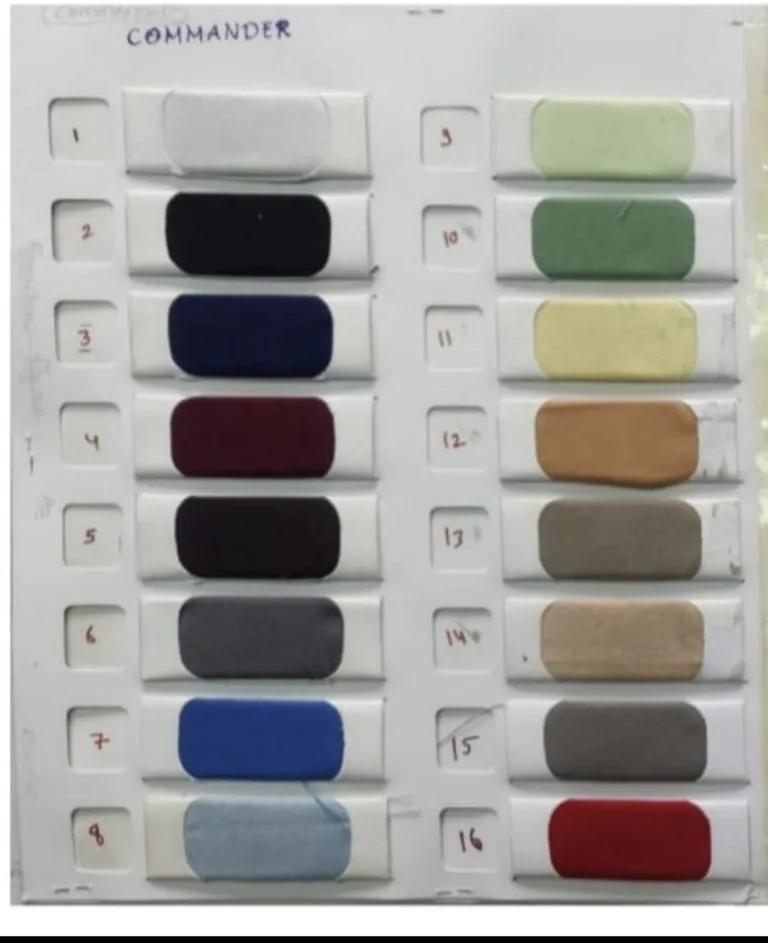
Commander PV Ultima Shirting
Poly-Viscose (PV Ultima), 2/40 x 2/40 premium, 2/40 x 1/20 standard
PV Ultima spun shirting in 135 shades, 36" and 58", grey ready year-round.
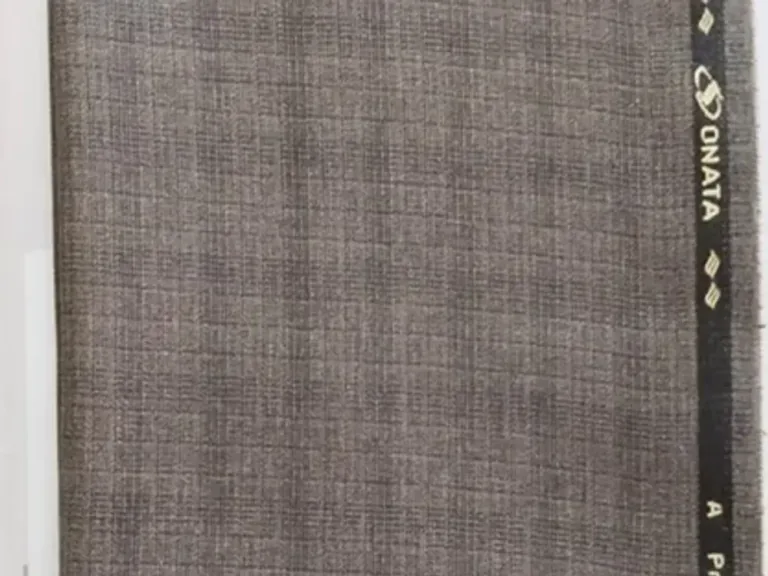
Sonata
Poly-Viscose blend · 190-210 GSM
Cost-efficient uniform fabric without compromising weave quality.
Industries this applies to
Uniform programs these fabrics are used for
- Fabric for Corporate Shirts
- Fabric for Corporate Trousers
- Fabric for School Uniforms
- Fabric for Sports & PT Uniforms
- Fabric for Pre-School & Kindergarten Uniforms
- Fabric for Doctor Coats
- Fabric for Nurse Scrubs
- Fabric for Lab Coats
- Fabric for OT & Surgical Wear
- Fabric for Patient Gowns
- Fabric for Chef Coats
- Fabric for Salon & Spa Uniforms
- Fabric for Ground Staff Uniforms
- Fabric for Army Uniforms
- Fabric for Police Uniforms
- Fabric for Security Guard Uniforms
- Fabric for Industrial Uniforms
- Fabric for Construction Workwear
- Fabric for Housekeeping Uniforms
Ready to place an enquiry?