
Buying guide
Fabric for Formal and Black-Tie Attire
How to choose formal suiting and black-tie fabric with a refined hand, deep saturated colour, and the structured finish needed for sharp, well-tailored garments.
Jump to section
Quick answer
Formal and black-tie fabric should combine a refined hand and clean drape with deep, saturated colour that reads as premium under evening light. A slightly heavier, well-finished poly-viscose twill gives the structure needed to tailor a crisp shoulder and a clean trouser line. Prioritise even, wash-fast dyeing and a smooth surface, since these carry most of the perceived quality in formalwear.
Hand, drape, and why finish matters
Formalwear is judged first on how the cloth moves and feels. A refined hand and a clean drape let a jacket fall without stiffness and a trouser hang straight, while a rough or papery surface undermines the whole garment.
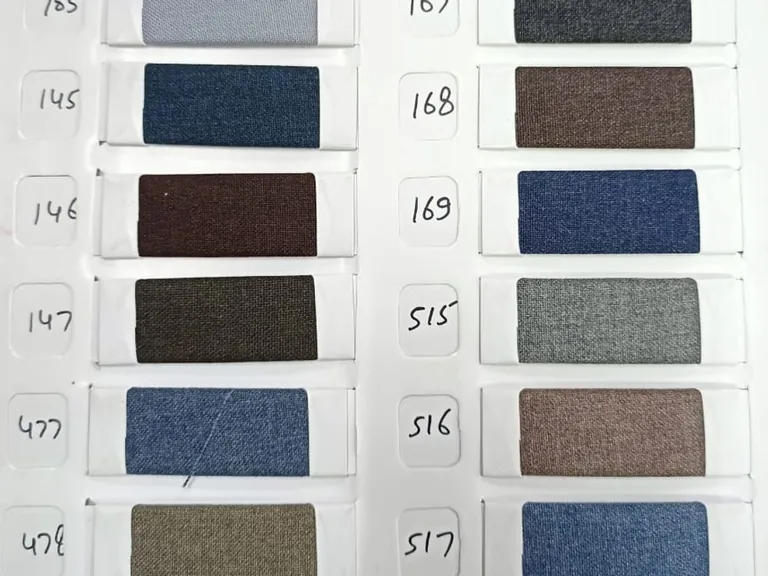
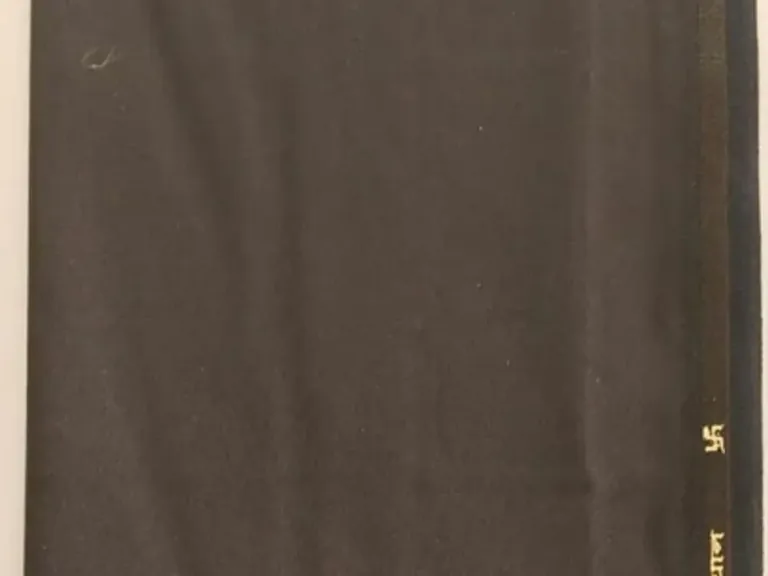
Power Gold is a premium poly-viscose twill at 230-250 GSM, giving it the weight and smooth finish that support a structured cut. Grado 1st, a poly-viscose twill at 220-240 GSM, offers a similar tailoring feel at a slightly lower weight.
Deep, saturated colour
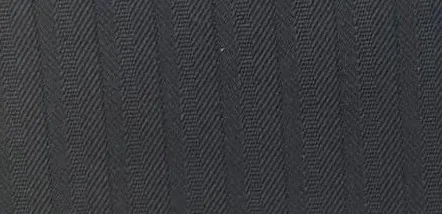
Black-tie and formal palettes rely on depth. Rich blacks, midnight navies, and deep charcoals read as premium and photograph cleanly under evening light, whereas washed-out tones look inexpensive regardless of the cut.
Even, wash-fast dyeing keeps that depth consistent across a garment and holds it through repeated cleaning, so a suit does not drift towards grey over its life.
What premium formalwear needs
- A smooth, refined surface with no rough or papery handle.
- Enough weight and structure to hold a tailored shoulder and lapel.
- Deep, saturated, even colour that stays wash-fast.
- A clean drape that lets trousers and jackets hang straight.
- Consistent quality across the run so matched pieces truly match.
Comparing formal suiting options
| Fabric | Weight and construction | Character |
|---|---|---|
| Power Gold | 230-250 GSM PV Twill | Premium weight, structured finish |
| Grado 1st | 220-240 GSM PV Twill | Refined twill, versatile tailoring |
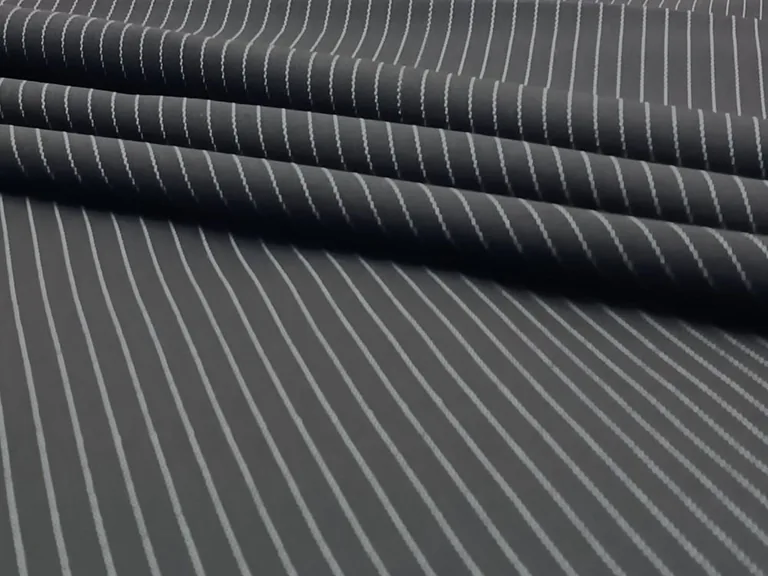
| Fine Strip Dobby | 205-225 GSM PV Dobby | Subtle woven texture for interest |
Heavier twills give the most structure for black-tie tailoring, while a dobby adds a quiet, textured detail to formal suiting.
Tailoring quality and structure
The finished garment is only as good as the cloth allows. A fabric with enough body takes interlining and pressing well, so lapels roll cleanly and trousers keep a crease, which is why the heavier poly-viscose twills suit black-tie work. Where a layer is bonded rather than sewn, the shell and the interlining have to be matched, as set out in collar and cuff fusing.
For a discreet point of interest, Fine Strip Dobby carries a subtle woven texture at 205-225 GSM while keeping a formal appearance. All these fabrics are woven at our own unit in Atoon, Bhilwara, and finished through trusted processing partners in the region, at 150 cm width, with ready stock available from 50 m per shade.
Choosing a matching lining
A tailored jacket is only as finished as its interior. Lining Strip, a 215 GSM poly-viscose stripe lining, gives a smooth face and easy drape for standard formal suiting, while Lining Super Class, a heavier 242 GSM poly-viscose lining, adds a fuller, more premium drape suited to black-tie jackets and outerwear.
FAQ
Frequently asked questions
- How should formal suiting be cleaned so the black stays black?
- Dry clean, and pay attention to the cleaner rather than only to the cloth. Solvent is filtered and reused, and a bath carrying too much suspended soil redeposits it, which is what makes a black programme go progressively flat and grey. It shows on deep shades first because a grey cast has nowhere to hide. Check a cleaned garment against the original reference swatch rather than against another cleaned garment, and keep the finishing press temperature low enough that the face of the cloth does not take on a shine.
- What makes a fabric suitable for black-tie attire?
- A refined hand, a clean drape, and deep saturated colour are the core requirements, supported by enough weight to hold a tailored shoulder and lapel. Premium poly-viscose twills such as Power Gold provide this structure and finish.
- How heavy should formal suiting fabric be?
- A range around 220 to 250 GSM suits most formal and black-tie garments, giving the body needed for crisp tailoring. Power Gold at 230-250 GSM and Grado 1st at 220-240 GSM both sit comfortably in this range.
- Does colour depth really affect how formal a suit looks?
- Yes. Deep, saturated blacks, navies, and charcoals read as premium and photograph cleanly, while washed-out tones look inexpensive regardless of the cut. Even, wash-fast dyeing keeps that depth through repeated cleaning.
- Can textured fabric work for formalwear?
- A subtle woven texture such as the dobby in Fine Strip Dobby can add quiet interest while keeping a formal appearance. The key is that the texture stays understated and the colour remains deep and even.
- What lining should I use with formal suiting fabric?
- Lining Strip, a 215 GSM poly-viscose stripe lining, gives a smooth face and easy drape for standard formal suiting. Lining Super Class, a heavier 242 GSM poly-viscose lining, adds a fuller drape better suited to black-tie jackets and outerwear.
- What is the minimum order for formal suiting fabric?
- Ready stock shades are available from 50 meters per shade. A custom shade or construction woven to order needs 500 meters per shade. Power Gold, Grado 1st and Fine Strip Dobby are woven at 150 cm width, while the linings are 147 cm, so confirm the width on the product page before working out yardage.
Cite this guide
Quoting this page? Paste the line below so the credit links back.
<a href="https://www.bennycotts.com/guides/formal-attire-suiting-fabric">Fabric for Formal and Black-Tie Attire</a>, Benny Cotts, 2026Updated 9 July 2026 · Benny Cotts, Bhilwara
Fabrics
Fabrics mentioned in this guide
Spec, price and MOQ on every fabric page.
Power Gold
Premium Poly-Viscose blend · 230-250 GSM
Our premium-line suiting with a refined hand and superior drape.
Grado 1st
Poly-Viscose blend · 220-240 GSM
Tailoring-grade fabric built for everyday durability.
Fine Strip Dobby
Poly-Viscose blend · 205-225 GSM
Subtle dobby texture for executive uniforms.
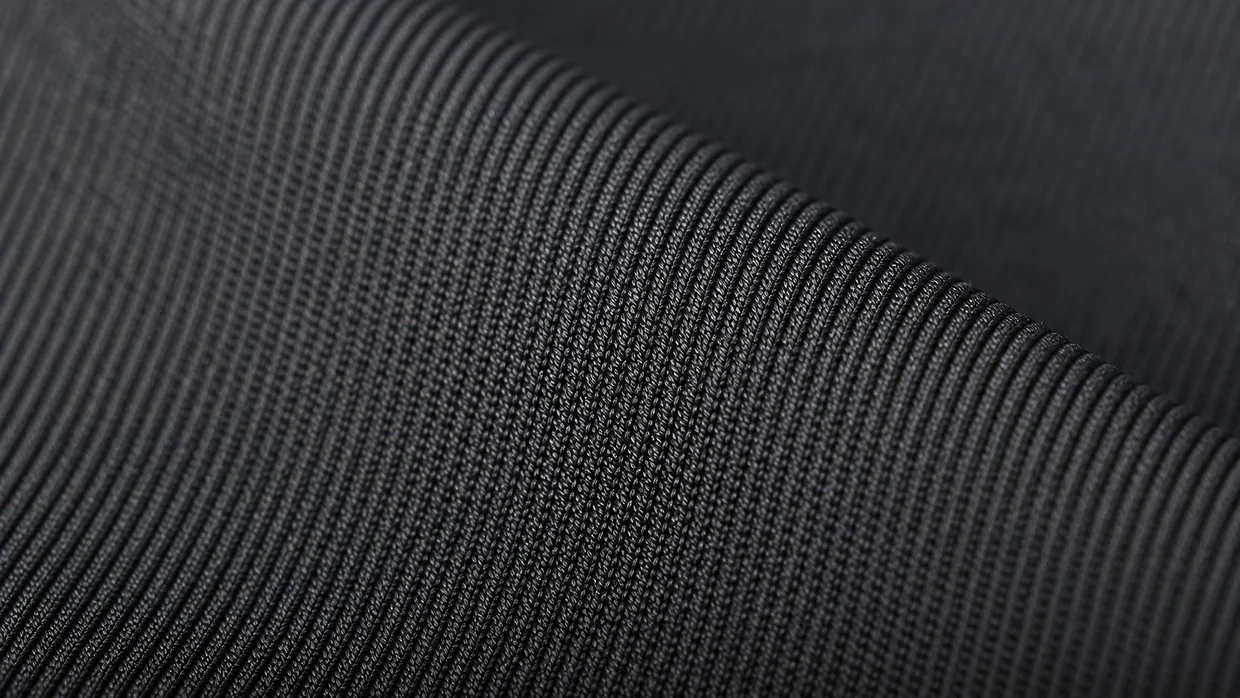
Lining Super Class
Poly-Viscose 70/30 · 242 GSM
Heavier poly-viscose lining with a smooth, premium drape.
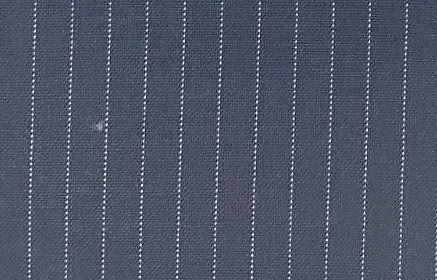
Lining Strip
Poly-Viscose 70/30 · 215 GSM
Poly-viscose striped lining for suits, jackets and uniforms.
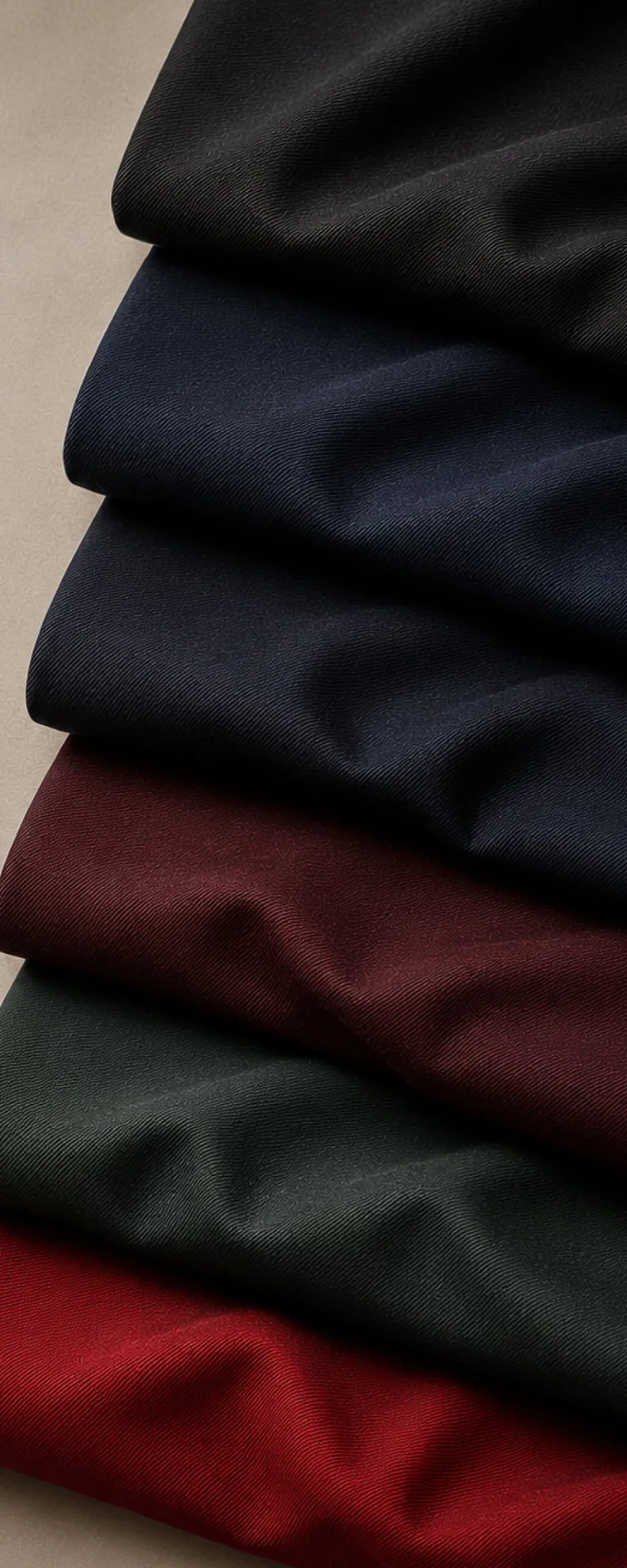
Serze Italian Premium
Poly-Viscose blend, fiber dyed · 405 g/m
Heavy fiber-dyed serge suiting, 405 g per metre at 58 inch.
Industries this applies to
Uniform programs these fabrics are used for
- Fabric for Business Attire
- Fabric for Corporate Uniforms
- Fabric for Corporate Trousers
- Fabric for Blazers & Waistcoats
- Fabric for School Uniforms
- Fabric for College & University Uniforms
- Fabric for Doctor Coats
- Fabric for Lab Coats
- Fabric for Hospital Staff Uniforms
- Fabric for Hotel Uniforms
- Fabric for Cabin Crew Uniforms
- Fabric for Ground Staff Uniforms
- Fabric for Police Uniforms
- Fabric for Business Suits
- Fabric for Black-Tie Attire
- Fabric for Formal Event Wear
Fabric types covered here
Keep reading
Related guides
Ready to place an enquiry?