
Buying guide
Choosing Industrial and Workwear Fabric
How to select industrial uniform and workwear fabric that resists abrasion, hides soiling, stays comfortable in heat, and holds up at high-wear points across a large workforce.
Jump to section
Quick answer
Industrial workwear fabric should prioritise abrasion resistance and strength at high-wear points such as knees, elbows, and cuffs, so a firm twill construction usually outperforms a plain weave. Choose utility shades that disguise dust, grease, and general soiling to keep garments presentable between washes. At scale, balance durability against per meter cost, and favour breathable poly-viscose blends that stay wearable in hot working conditions.
Why abrasion resistance matters most
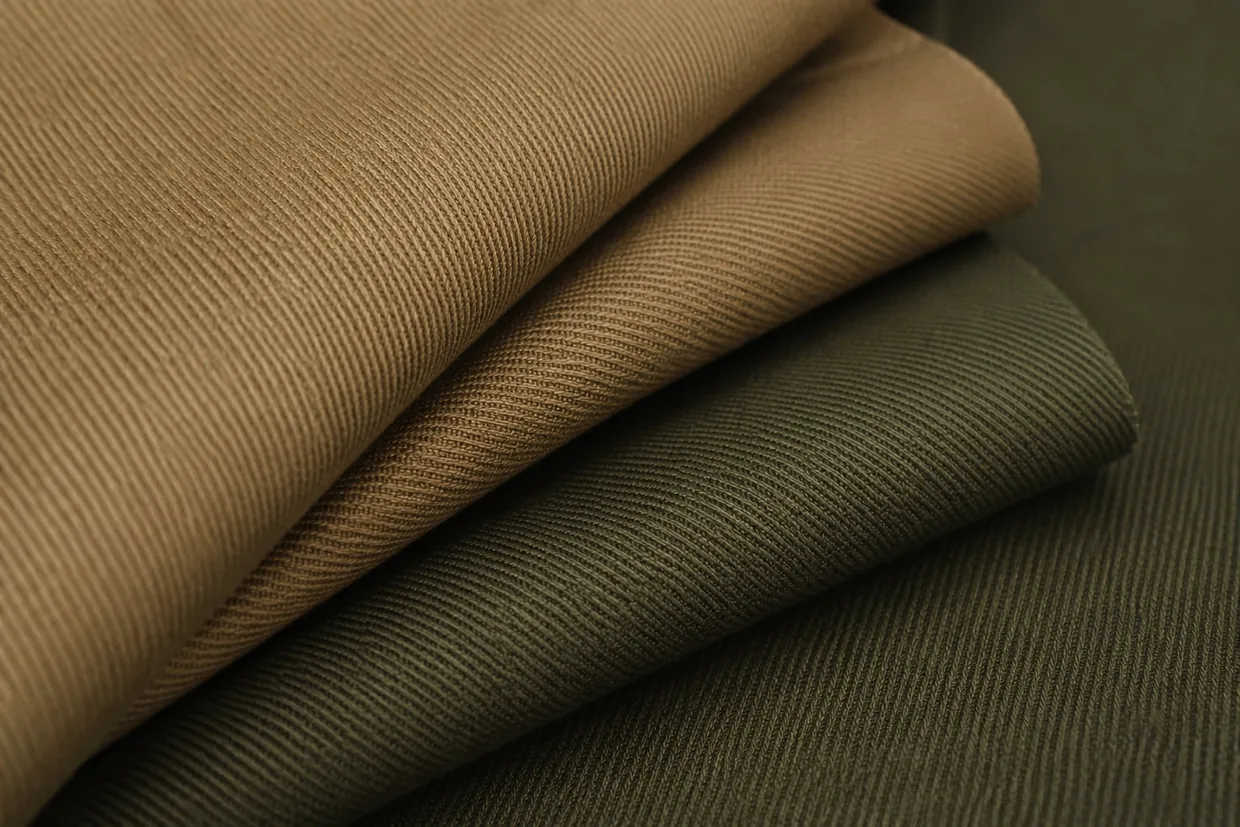
Workwear fails first at the points that rub against tools, machinery, and work surfaces. A tightly woven twill spreads wear across a diagonal structure and resists thinning far better than an open plain weave, which is why twill constructions are the usual starting point for industrial garments.
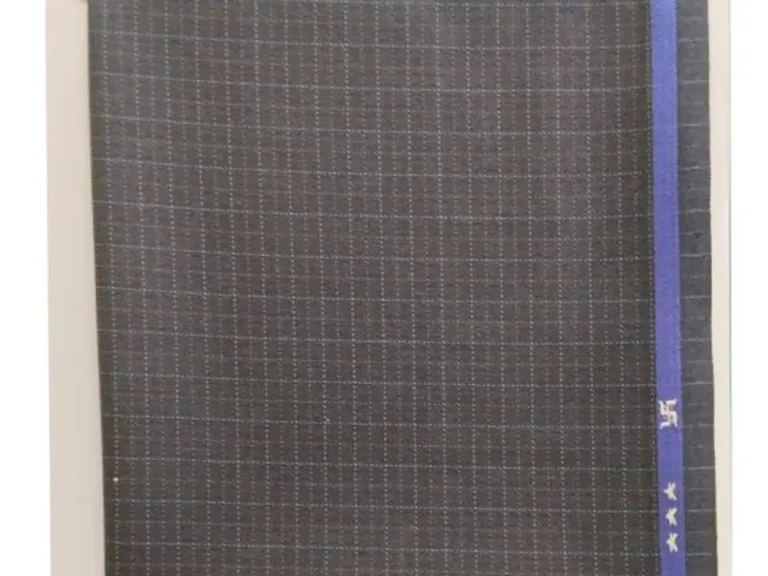
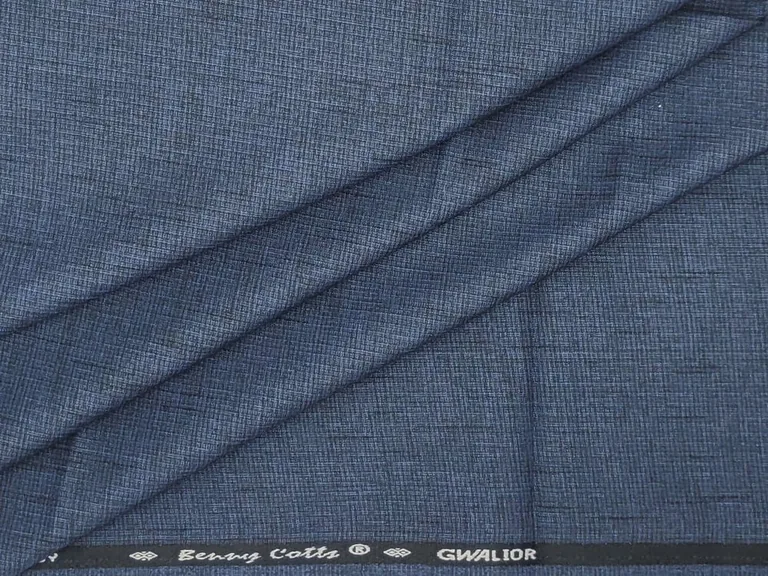
Panto is a poly-viscose twill at 215-235 GSM, which gives it the body and firm surface that hold up to repeated friction. Where budgets are tighter, Nano at 180-200 GSM offers a lighter poly-viscose option for lower-intensity roles. For the heaviest-wear roles, Boxer, a firm 235 GSM matty-weave polyester, and Denim HV, a rugged 235 GSM poly-viscose with a denim-inspired handle, both trade a little breathability for extra body. 2/18 Trouser Line, a structured 235 GSM poly-viscose matty, is worth specifying for trousers specifically, since it holds a crease better than a general-purpose twill.
Durability at high-wear points
The seams and panels under the most stress are the knees, seat, elbows, cuffs, and shoulders where straps sit. Specifying a slightly heavier weight for trousers than for shirts, and reinforcing these panels at the tailoring stage, extends the working life of a set.
- Knees and seat on trousers take the heaviest abrasion and benefit from a firmer twill.
- Cuffs and elbows on shirts wear from repeated bending and contact.
- Shoulder panels carry strap loads on roles that use harnesses or bags.
- Pocket edges and plackets fray early when garments are heavily handled.
Shades that hide soiling
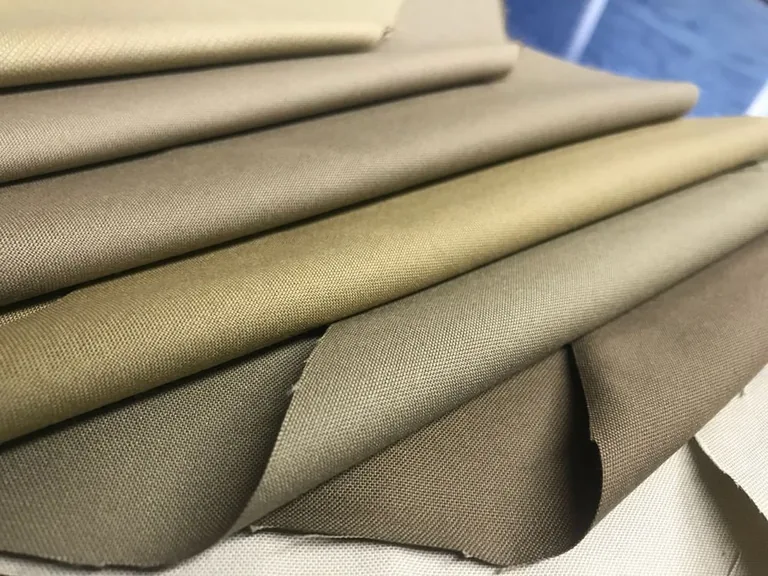
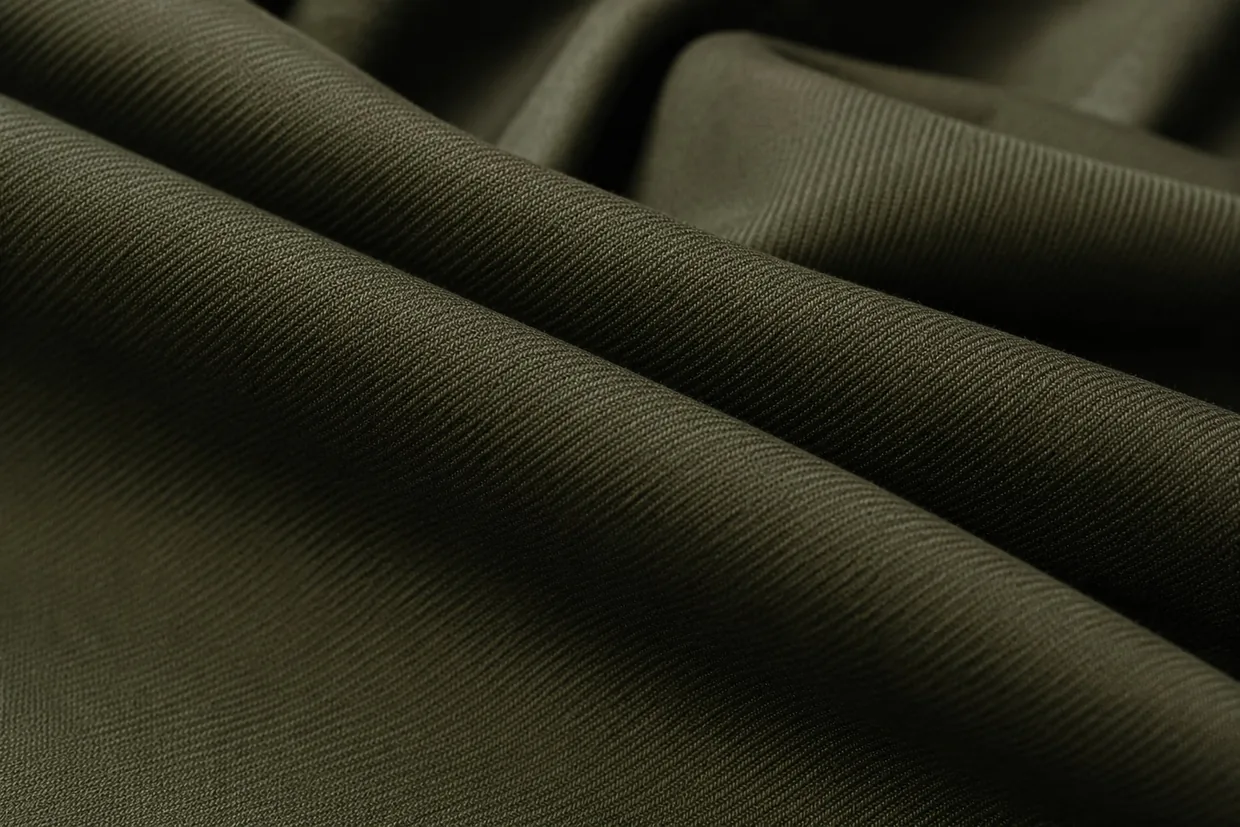
Utility shades keep a workforce looking presentable when washes are infrequent and soiling is constant. Mid to deep tones such as greys, navies, olives, and slate disguise dust, oil, and general marks far better than pale colours, which show every stain.
Deeper shades also mask minor fading and wear, so garments look uniform across a fleet even as they age at different rates. Where a role needs to stand out rather than blend in, such as a safety marshal or team lead, Zebra Strip's bold striped weave gives a visually distinct alternative to solid utility shades.
Weight, comfort, and cost at a glance
| Fabric | Weight and construction | Best fit |
|---|---|---|
| Panto | 215-235 GSM PV Twill | High-wear industrial roles |
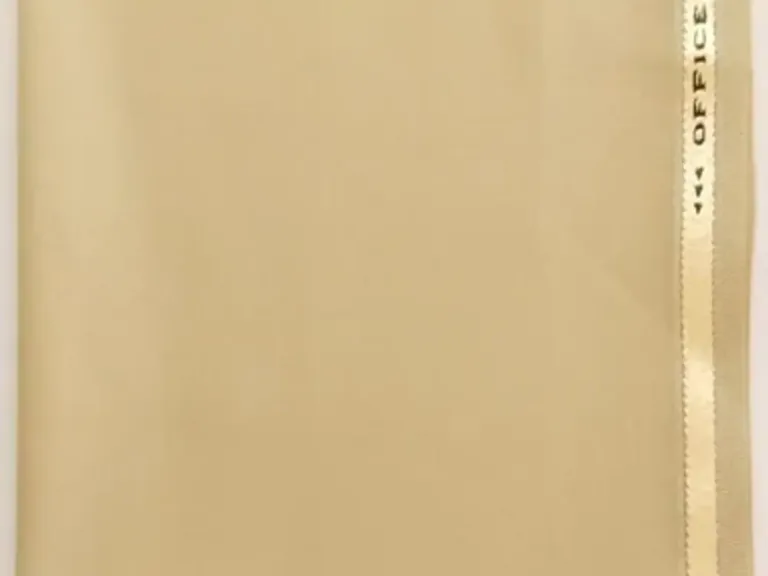
| Officer Choice | 210-230 GSM PV Plain or structured | General workwear and supervisory kit |
| Nano | 180-200 GSM PV Plain | Budget kit and lighter-duty roles |
| Boxer | 235 GSM Polyester Matty | The heaviest-wear roles needing maximum body |
| Denim HV | 235 GSM PV, rugged handle | Utility and workwear programs wanting a denim-look finish |
Heavier twills and mattys last longer at wear points, while lighter plain weaves keep the per meter cost and the wearer cooler. Where a site also asks for repellency or static control on top of the construction, read water-repellent, oil-repellent and anti-static finishes before writing it into the spec.
Comfort in heat and buying at scale
Most industrial work happens warm, so a breathable blend matters as much as strength. Poly-viscose keeps garments lighter and more breathable than heavy pure synthetics while still holding shape and colour through frequent washing.
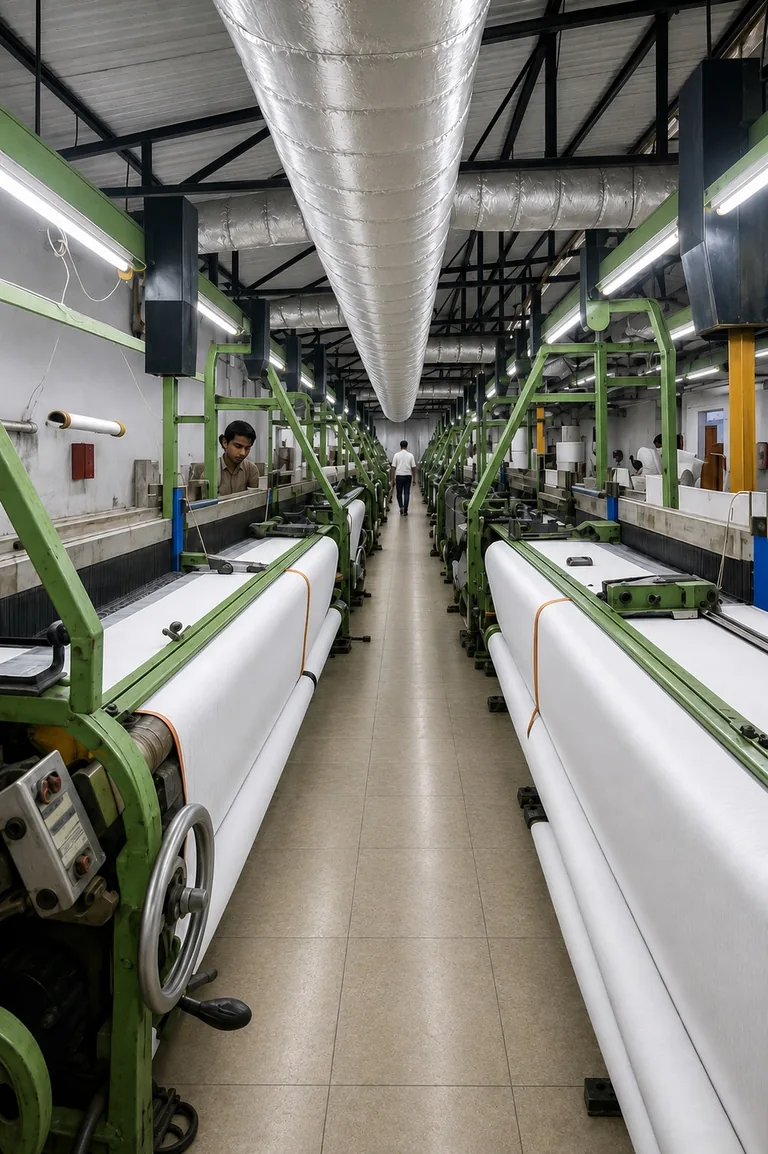
When you buy at scale, small per meter differences multiply quickly, so match the weight to the role rather than over-specifying. Ready stock shades can be ordered from 50 m per shade, while custom shades or constructions woven to order start at 500 m per shade. All fabrics are woven at our own unit in Atoon, Bhilwara, and finished through trusted processing partners in the region. Width varies by quality, most commonly 147 or 150 cm, so confirm it on the product page before working out yardage.
This guide covers general industrial and factory-floor workwear. For fabric specific to building sites, see our construction workwear fabric guide.
FAQ
Frequently asked questions
- Is twill or plain weave better for workwear?
- Twill is usually the better choice for demanding industrial roles because its diagonal structure resists abrasion and thinning at high-wear points. Plain weaves suit lighter-duty roles where cost and breathability matter more than maximum durability.
- What GSM should industrial workwear be?
- For firm, hard-wearing garments a range around 210 to 235 GSM works well, as seen in Panto and Officer Choice. Lighter roles can use fabrics near 180 to 200 GSM such as Nano to save cost and keep the wearer cooler.
- Which colours hide dirt and grease best?
- Mid to deep utility shades such as grey, navy, olive, and slate disguise dust, oil, and general soiling far better than pale colours. They also mask minor fading, so a fleet looks consistent as it ages.
- Is poly-viscose comfortable in hot conditions?
- Poly-viscose blends stay lighter and more breathable than heavy pure synthetics while holding shape and colour through frequent washing. Choosing a weight matched to the role keeps garments wearable in heat without sacrificing durability.
- What fabric suits a supervisor or safety marshal who needs to stand out?
- Zebra Strip's bold striped weave gives a visually distinct alternative to the solid utility shades used for general crews. It works well for roles such as safety marshals or team leads that need to be spotted quickly on a site or floor.
- Which fabric holds a crease best for workwear trousers?
- 2/18 Trouser Line is a structured 235 GSM poly-viscose matty built specifically for trousers, and it holds a crease better than a general-purpose twill such as Panto. It is worth specifying separately from shirt fabric where a sharper trouser line matters.
Cite this guide
Quoting this page? Paste the line below so the credit links back.
<a href="https://www.bennycotts.com/guides/industrial-workwear-fabric">Choosing Industrial and Workwear Fabric</a>, Benny Cotts, 2026Updated 9 July 2026 · Benny Cotts, Bhilwara
Fabrics
Fabrics mentioned in this guide
Spec, price and MOQ on every fabric page.
Panto
Poly-Viscose blend · 215-235 GSM
Workhorse trouser fabric with consistent dye lots.
Nano
Poly-Viscose blend · 180-200 GSM
Our entry-level uniform fabric for large-volume programs.
Officer Choice
Poly-Viscose (PV) blend · 210-230 GSM
Crisp, structured suiting engineered for officer uniforms.
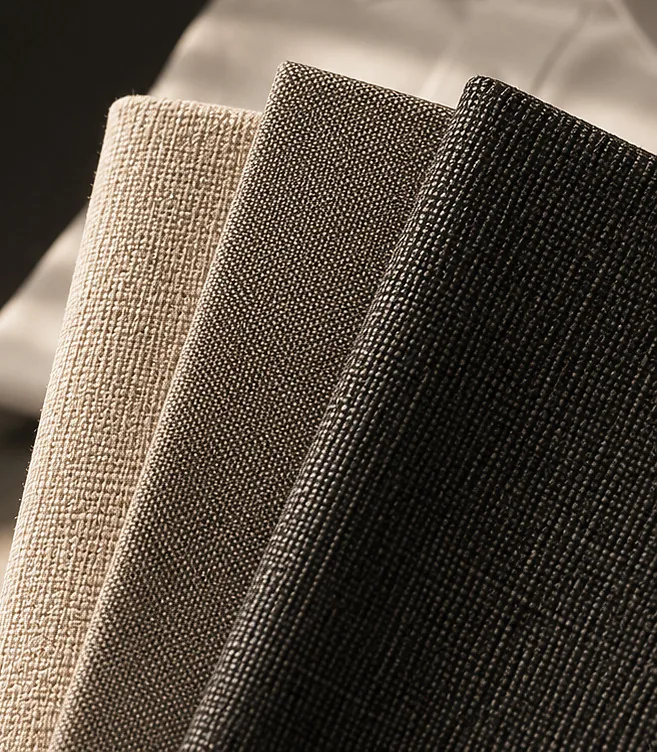
Boxer
100% Polyester · 235 GSM
Firm matty-weave polyester built for heavy-duty uniform wear.
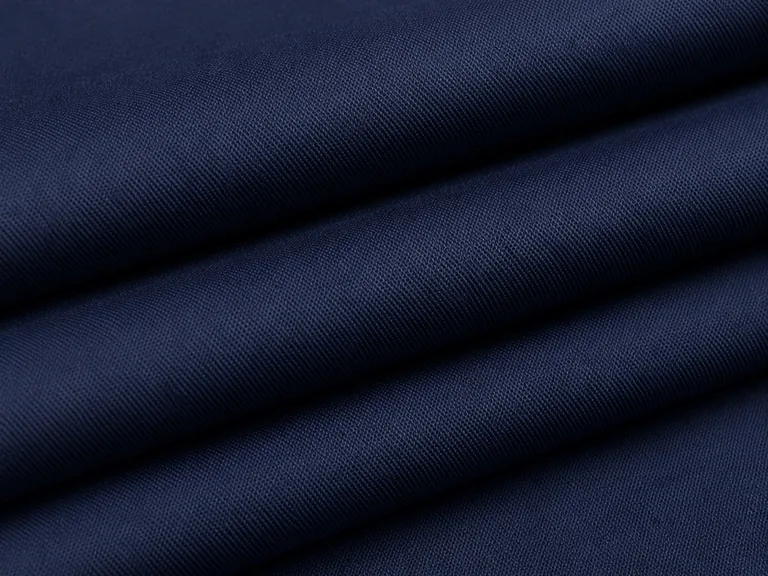
Denim HV
Poly-Viscose 70/30 · 235 GSM
Poly-viscose denim-look uniform cloth with a rugged handle.
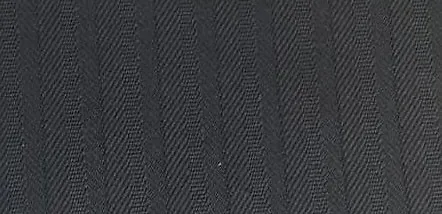
2/18 Trouser Line
Poly-Viscose 70/30 · 235 GSM
Structured poly-viscose matty woven for hard-wearing uniform trousers.
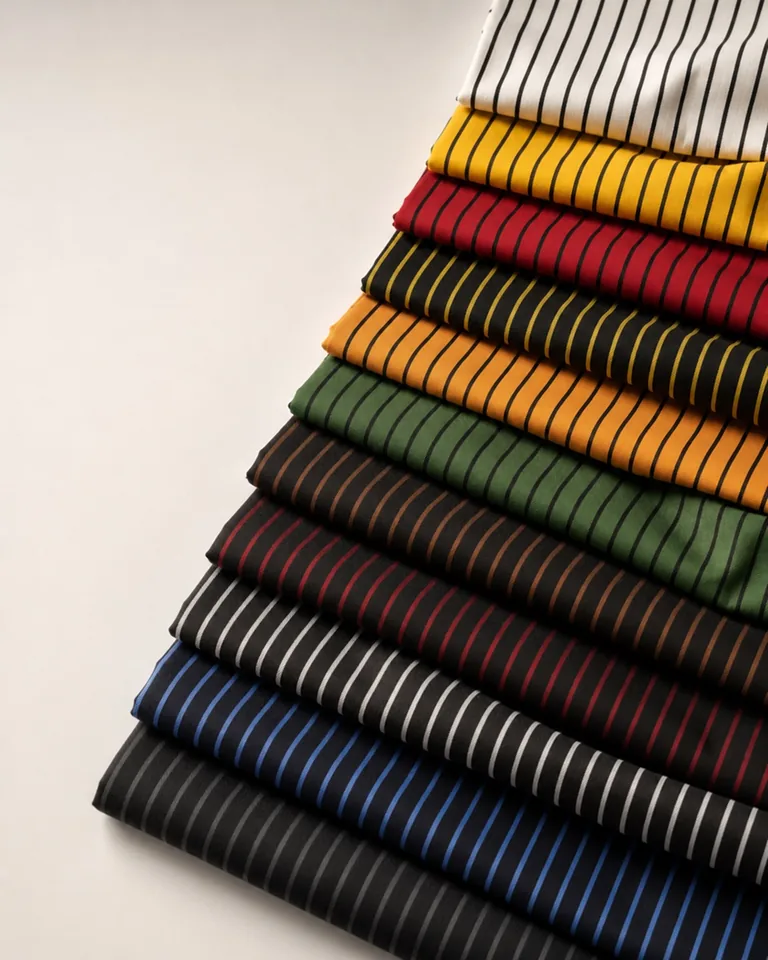
Zebra Stripe
100% Polyester · 219 GSM
Bold striped polyester for statement uniform and workwear.
Industries this applies to
Uniform programs these fabrics are used for
- Fabric for Corporate Trousers
- Fabric for Sports & PT Uniforms
- Fabric for Patient Gowns
- Fabric for Hospital Staff Uniforms
- Fabric for Ground Staff Uniforms
- Fabric for Army Uniforms
- Fabric for Police Uniforms
- Fabric for Security Guard Uniforms
- Fabric for Industrial Uniforms
- Fabric for Construction Workwear
- Fabric for Housekeeping Uniforms
Fabric types covered here
Keep reading
Related guides
Ready to place an enquiry?